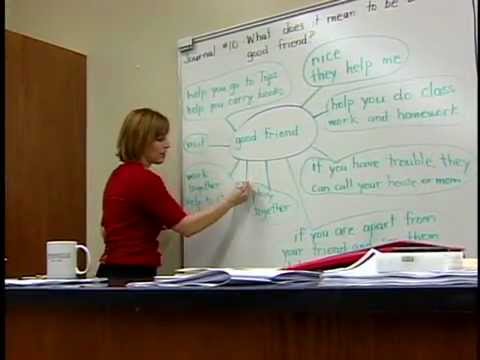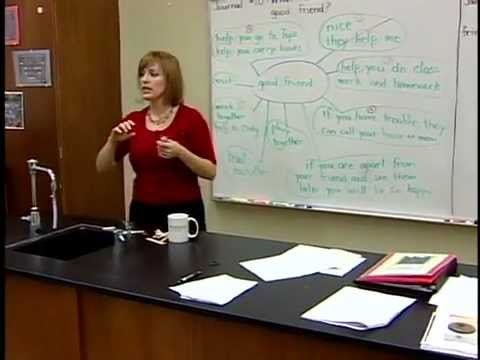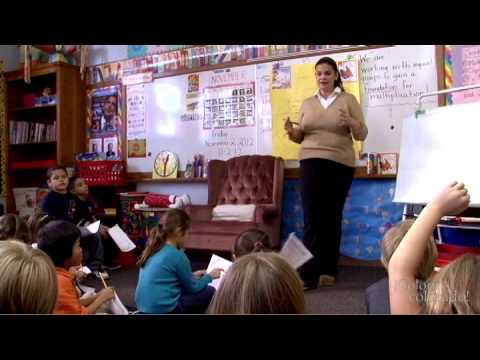
Teachers who work with English as a Second Language learners will find ESL/ESOL/ELL/EFL reading/writing skill-building children's books, stories, activities, ideas, strategies to help PreK-3, 4-8, and 9-12 students learn to read.
Writing Strategies for ELLs
For many ELL students, writing poses a big challenge to completing academic work, assessments, and graduation requirements.
This section on Colorín Colorado includes the following:
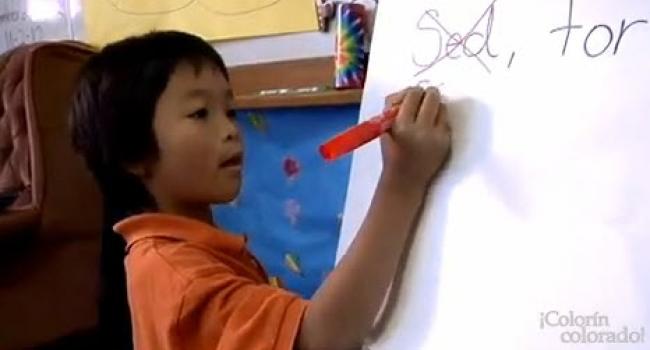
From Colorín Colorado: ELL Writing Strategies
Send us your ideas!
How do you systematically teach writing to ELLs within your school? Have you found it successful?
Send us an email or join our discussion on Ning.
Writing assessments and essays for ELLs
- Standards-Based Writing for ELLs (Colorín Colorado)
- Writing a Winning Essay (Kristina Robertson)
Tips and tools for teaching ELLs the writing process
- Graphic Organizers (Colorín Colorado)
- Recommended writing websites (Colorín Colorado)
- La Pluma es Lengua del Alma: Using Writing to Chronicle the Soul's Journey (Bobbi Houtchens, California English)
- Writing Considerations for ELLs (The Education Alliance, Brown University)
- Writing and English as a Second Language(Learn NC, University of North Carolina)
- Tips for Teaching ELLs to Write (Judie Haynes)
- Giants Steps with Nonfiction Writing for ELLs (Judie Haynes)
Writing activities and resources for ELLs
- Improving Writing Skills: ELLs and the Joy of Writing (Colorín Colorado)
- Writing Ideas from the ELL Classroom (Colorín Colorado)
- Children's Writing in ESL (Sarah Hudelson)
- Writing Poetry with English Language Learners (Kristina Robertson)
- Facilitating Writing Fluency (Susan Lenski and Frances Verbruggen)
ELL student voices
- English Language Learners and the Power of Personal Stories (Larry Ferlazzo, as posted on The New York Times)
- Student Essay: Fulfilling a Family's Dream (College Summit)
- Student Stories: What Is the Best Advice Your Parents Ever Gave You? (National Writing Project)
Research and Guides
- Writing Instruction and Assessment for English Language Learners K-8: This handbook by Susan Lenski and Frances Verbruggen offers ELL and mainstream teachers a number of tools and strategies they can use to help ELLs become successful writers. Topics include handwriting and spelling for ELLs, facilitating writing fluency, features of various written languages that may appear in ELLs' writing, approaches for teaching different genres of writing, and detailed information on different types of writing assessments. The authors have also included rubrics, graphic organizers, and recommended resources in each chapter. (Guilford Press, 2010)
- A Cognitive Strategies Approach to Reading and Writing Instruction for English Language Learners in Secondary School: The purpose of the study conducted by members of the California Writing Project was to assess the impact of a cognitive strategies approach on the reading and writing abilities of English language learners (ELLs) in a large, urban, low-SES school district where 93% of the students speak English as a second language and 69% are designated Limited English Proficient.
- Approaches to Writing Instruction for Adolescent English Language Learners: "English language learners (ELLs) in today's U.S. middle schools and high schools face significant challenges from state writing assessments, and data suggest that they do not fare well. This paper seeks to uncover some of the reasons by posing the question: What is the available research base and practice literature to help teachers prepare ELLs to meet the standards?" (Education Alliance, Brown University)
Parent Resources
Developing Writing and Spelling at Home: Pre-K
Writing is a terrific way for children to express their thoughts, creativity, and uniqueness. It is also a fundamental way in which children learn to organize ideas. This bilingual article offers ideas that parents can use at home, with a PreK version and K-3 version.
Handwriting: What's Normal, What's Not
This bilingual article offers parents information on handwriting development and signs of a writing disability. Also available in Spanish.
Tips for Parents of Struggling Adolescent Writers
This article discusses some of the reasons that older students may want to avoid writing, as well as some ways that parents can help their teen become a better writer. Also available in Spanish.
From Our Sister Sites
Reading Rockets Webcast: Teaching Writing
Featuring Dr. Steven Graham, Dr. Louisa Moats, and Dr. Susan Neuman. These three renowned reading and writing experts address why writing is important, what the latest research tells us, and what educators and parents can do to support our children's development as writers.
Reading Rockets: Writing & Spelling (Launching Young Readers)
Hosted by Vivica A. Fox, Writing and Spelling examines the connection between reading and writing and between spelling and composition. The program features successful methods for encouraging children to write and build their vocabularies. Features children's book author and illustrator Kate Duke (Aunt Isabel Tells a Good One).
Reading Rockets: Writing Resources for Grades PreK-3
From handwriting to creative writing, learn more from Reading Rockets about ways to encourage kids' writing. An often overlooked topic area, writing can provide a means to enhance students' vocabulary, comprehension, and spelling skills.
AdLit.org: Writing Resources for Grades 4-12
Writing is an often overlooked component of literacy, but the ability to write clearly and communicate effectively is critical to students — classroom and workplace success. And writing assignments can provide a means to enhance students' vocabulary, comprehension, and spelling skills.
LD OnLine: Writing & Spelling
Articles within this section cover a broad range of topics, including writing disabilities, understanding dysgraphia (a term used to describe difficulty in writing and particularly handwriting), teaching writing skills, and technology resources for writing.
Search Colorín Colorado
I look forward to coming back again and again. After all, I must learn myself. We can't teach what we don't know.
~ Maria C.