Pat Mora is a mother, author, poet, and tireless literacy advocate. Her writings range from lyrical picture books to adult prose. Her most common themes are family, Mexican-American culture, and the desert. Since growing up along the border as a second-generation Mexican American, Mora has become a valuable translator between Hispanic and non-Hispanic audiences. One day she may address a room full of teachers and librarians about outreach to parents. The next day she may speak to parents in Spanish about ways they can better partner with their children’s school. Mora’s charming picture books also reach out across cultures. They are available in English and Spanish, but are often bilingual.
Books by This Author
A Birthday Basket for Tía
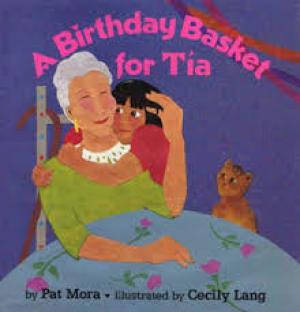
Cecilia and her cat, Chica, create a special birthday present for her great-aunt's 90th birthday — a basket filled with things Cecilia and her tía have shared. This affectionate autobiographical story is illustrated with warm colors, suggestive of Mexican American traditions.
A Library for Juana
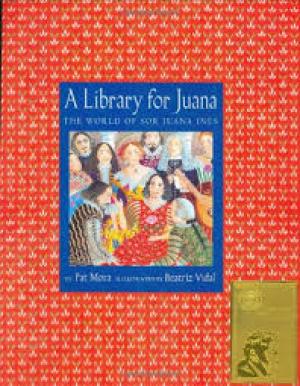
This picture book biography introduces Sor Juana Inés de la Cruz, one of Mexico's most beloved scholars and poets. At the age of three, Juana promised her sister's teacher that she was "quiet like a turtle" so that she could stay at the school and learn to read. Later, Juana would become a nun and produce poetry that is still learned by children in Mexico today. Handsome, detailed paintings evoke Mexican folk art and tell the story of Juana's life.
A Piñata in a Pine Tree
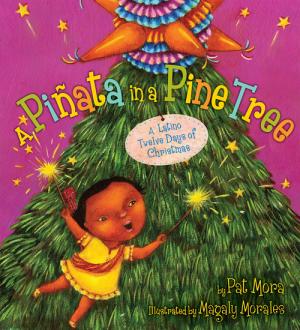
In this festive holiday book, Pat Mora blends traditions by setting her own Spanish lyrics to the popular Christmas carol, "The Twelve Days of Christmas." Each verse describes a Latino custom, often related to the celebration of Three Kings Day: "On the second day of Christmas my amiga gave to me / dos pastelitos / and a piñata in a pine tree." Vibrant acrylic illustrations of guitarritas, luminarias, and piñatas dance with joy on the colorful pages.
Adobe Odes
Product Description: Award-winning poet Pat Mora invites readers into her home in this new collection of forty-nine odes. Inspired by Pablo Neruda's Odas Elemantales and reinvented with a Latina identity, Mora celebrates the ordinary in lyrics that are anything but. Her poetry is the poetry of space — house patterns and adobe constructions — and the human rhythms that happen inside. It is also the poetry of what she loves-chocolate, books, dandelions, church bells, hope, courage, and even rain.
Agua Santa/Holy Water
Product Description: Drawing on oral and lyrical traditions, this book honors the grace and spirit of mothers, daughters, lovers, and goddesses. From a tribute to Frida Kahlo to advice from an Aztec goddess, the poems explore the intimate and sacred spaces of borderlands through many voices: a revolutionary, a domestic worker, a widow.
Agua, Agua, Agua

Crow knows where to find water amid rocks and how to get it even though it's below the reach of his beak. The predictable patterns and repetition of words in this simple retelling of a fable invites participation. Bold illustrations use broad shapes and confident line in strong borders contained in a small format ideal for a new reader or to share on a lap.
Aunt Carmen's Book of Practical Saints

Product Description: The Northern New Mexico tradition of saint carving began in the 1700s as an expression of worship among Catholics in isolated villages. In Aunt Carmen's Book of Practical Saints, Pat Mora extends the tradition to poetry. Through Mora's poems, some written in traditional Spanish forms, we hear the private speech of Aunt Carmen's devotion. From a prayer for a suitable husband to a prayer that the Good Shepherdess guide her to unexpected beauty, Aunt Carmen's poems, each paired with a reproduction of a traditional saint carving, inspire and illuminate.
Book Fiesta!
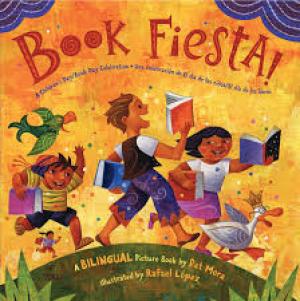
Even though there's a special day called Children's Day/Book Day, children and books can be celebrated everyday and in any place as is demonstrated in this vibrant book. Energetic illustrations show a wide range of children and animals playing, reading, and just plain having fun with each other and with books.
Borders
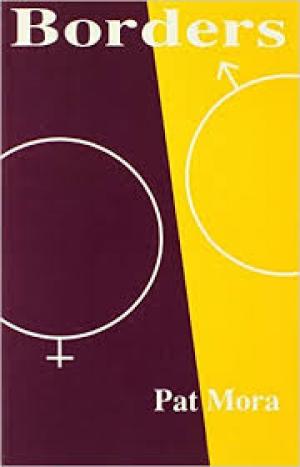
In Borders, Mora explores the political, cultural, social, and emotional borders that divide people, forming their individual identities. "We begin one of Mora's poems as if embarking on an exploration of an unknown country. When we finish, we have learned so much about its topology we feel we can claim the land as ours. These are arduous expeditions, though, for both writer and reader. You don't plant your flag without earning the right" — El Paso Times
Delicious Hullabaloo

On a starry night, a group of lizards and their friends gather for music, food, and fun — a delicious hullabaloo! Whether it's the mangos, cerezas dules (sweet cherries), or the sassy salsa, everyone is sure to find a treat that they enjoy in this delightful poem illustrated with colorful, whimsical depictions of a desert setting.
Pages