Colorin Colorado: Helping children read... and succeed!
A bilingual site for families and educators of English language learners
  • small text
  • medium text
  • large text
  • print

Elementary ELLs

These guides offer a wide range of strategies and lessons for reading, writing, math, and content instruction for grades PreK-5. A number of the books also offer suggestions for classroom set-up and management, with tips for creating learning centers, word walls, and classroom libraries that foster language and literacy.

 Literacy Instruction for English Language Learners: PreK-2
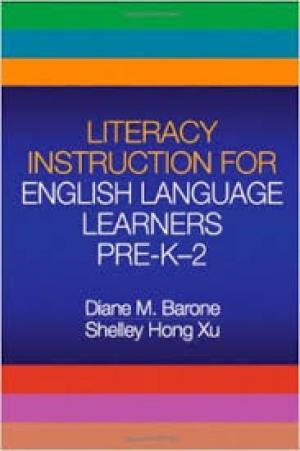
Literacy Instruction for English Language Learners: PreK-2
By: Diane Barone, Shelley Hong Xu
The Guilford Press

This book is a must-have for anyone who teaches ELLs in Pre-K through second grade. Each chapter is packed with practical, research-based strategies that teachers can immediately put to use in their own classrooms. The discussion focuses on working with ELL families, choosing appropriate instructional materials for ELLs, and effective instructional practices in: oral language development, assessment, writing, comprehension, spelling, vocabulary, and phonics. Throughout the book, Barone and Xu summarize current research in literacy instruction for ELLs, but their emphasis is on specific strategies that translate that research into effective classroom teaching.

English Language Learners: Day by Day K-6
By: Christina M. Celic
Heinemann
(2009)

During her experience as an ESL and bilingual teacher, Christina Celic has compiled a number of practical strategies for creating an effective and welcoming learning environment in her classroom. In this guide, she shares hands-on approaches for classroom set-up and management, creating a class profile, determining appropriate homework assignments, and incorporating content learning throughout the classroom and curriculum. The first chapter, focusing on classroom set-up, is available on the publisher website.

Hands-On English Language Learning: Early Years
By: Jennifer Lawson (Editor)
Portage and Main Press
(2009)

This guidebook provides thematic units appropriate for early elementary ELLs or, in some cases, for older newcomers with limited literacy and vocabulary skills. While the standards and content are designed for Canadian schools, the units provide a wide variety of vocabulary, enrichment, and communication activities on topics such as the classroom, the alphabet and counting, weather, and mapping skills. Flash cards, worksheets, and activities are included on a supplementary CD-ROM. Excerpts available on publisher website.

Many Languages, One Classroom: Teaching Dual and English Language Learners
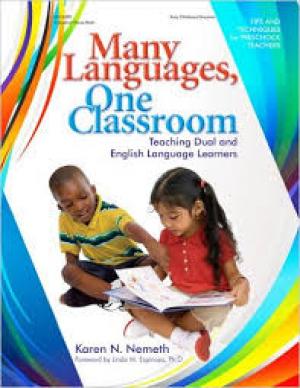
By: Karen Nemeth

Product Description: Even the most experienced teacher can feel a bit unsure about meeting the unique needs of children from different language backgrounds. Organized by interest areas and times of the day, you'll find everything you need to open the doors of literacy and learning for young English language learners during dramatic play, outdoor play, reading, science, blocks, and circle time.

Research-Based Methods of Reading Instruction for English Language Learners: Grades K-4
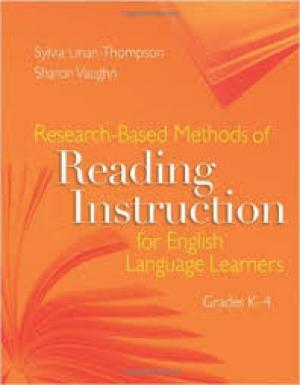
By: Sylvia Linan-Thompson, Sharon Vaughn
instruction for English language learners: Grades K-4. Alexandria, VA: Association for Supervision and Curriculum Development

This practical and accessible guide is organized around the five key components of reading instruction. The authors begin each section with a clear description of why instruction in that particular component is important and what that instruction should look like. The book includes descriptions of more than 60 lessons that can be adapted for many different levels of instruction, as well as a very useful glossary of terms related to literacy and English language learning. Clearly written and well-organized, this book would be equally useful to veteran reading teachers and teachers who are exploring reading instruction for the first time.

Supporting English Language Learners: A Guide for Teachers and Administrators
By: Farin A. Houk
Heinemann

Learn how to help ELLs thrive in the classroom and school community from veteran educator Farin A. Houk. Written in a style that is thoughtful, compassionate, and easy to read, Houk offers numerous examples and specific strategies to assist school leaders (at the classroom, department, and administrative levels) develop a schoolwide plan for addressing ELLs' needs, allocating resources on behalf of ELLs, providing effective instruction, and becoming advocates at the district and local level. An excerpt from the chapter on assessment is available on the Heinemann website.

Teaching English Language Learners in Elementary School Communities
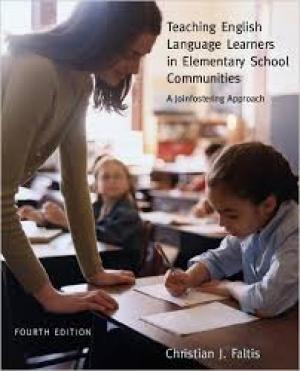
By: Christian J. Faltis
Prentice Hall
(2005)

Product description: This book addresses teachers' expectations of English Language Learners, solutions for the dual-language classroom, how to encourage active participation and social integration, mixed-language whole-class teaching, small groupwork, involving families and communities in school activities, and assessment-an invaluable resource for teaching English Language Learners.

Teaching English Language Learners: Strategies That Work  (K-5)
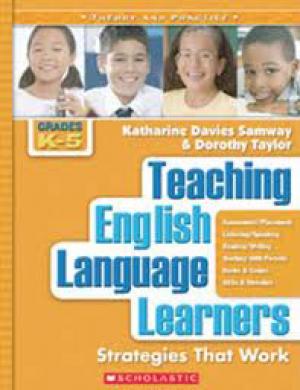
Teaching English Language Learners: Strategies That Work (K-5)
By: Katharine Davies Samway, Dorothy Taylor
Scholastic
(2007)

This useful guide presents frequently asked questions from ELL educators, and then provides targeted strategies to address each question. Topics include sociocultural issues, listening, speaking, reading, writing, parent communication, and classroom management.