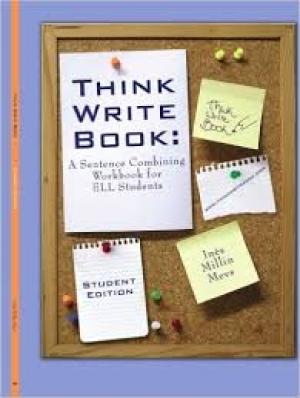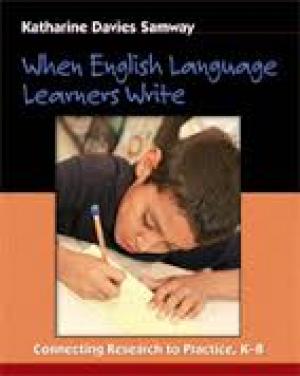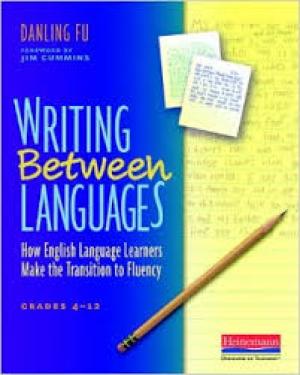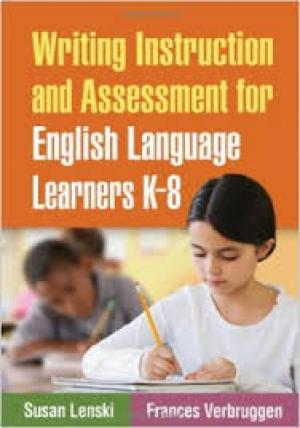
Teachers who work with English as a Second Language learners will find ESL/ESOL/ELL/EFL reading/writing skill-building children's books, stories, activities, ideas, strategies to help PreK-3, 4-8, and 9-12 students learn to read.
Writing for the ELL Classroom
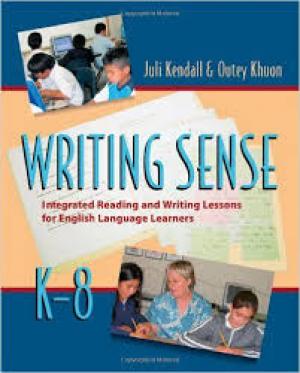
These titles include writing activities, research-based strategies, and lots of great prompts and vocabulary lists to help your students become stronger writers!

In this must-read guide, experts Nancy Cloud, Fred Genesee, and Else Hamayan lay out a research-based yet practical and accessible approach to reading and writing instruction for ELLs. Designed for ELL teachers, mainstream teachers, and reading specialists, the book offers an excellent foundation on what we know about literacy development in ELLs before offering numerous classroom strategies on topics such as: emergent literacy in a second language; helping ELLs become biliterate; academic language and literacy; connecting reading and writing; and assessment. The book is full of classroom examples, extra tips and research questions, recommended resources, and useful skill charts, presented by the authors in a thoughtful, comprehensive, and clear format.

This Fourth Edition of Peregoy & Boyle's text continues the strengths of the third with its comprehensiveness and accessibility, providing a wealth of practical strategies for promoting literacy and language development in English language learners (K-12). Unlike many texts in this field, Reading, Writing and Learning In ESL takes a unique approach by exploring contemporary language acquisition theory as it relates to instruction and providing suggestions and methods for motivating and involving ELL students.

Tired of reading student papers that describe things as "nice" or "good"? This workbook, highly recommended by educators, helps young students improve their vocabulary, grammar, and spelling. Filled with reproducible worksheets that offer alternative word choices for vague or overused terms, this book will not only help students understand these elements of good writing, but will support students as they produce their own descriptive texts.

This handbook offers ELL and mainstream teachers a number of tools and strategies they can use to help ELLs become successful writers. Topics include handwriting and spelling for ELLs, facilitating writing fluency, features of various written languages that may appear in ELLs' writing, approaches for teaching different genres of writing, and detailed information on different types of writing assessments. The authors have also included rubrics, graphic organizers, and recommended resources in each chapter.

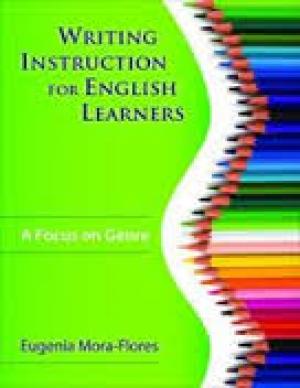
Moving beyond the writing process, this useful resource is filled with activities and graphic organizers to help students understand and then produce various types of writing: narrative, expository, persuasive and poetic. Each writing type includes multiple genres-for example, the persuasive form comprises letters, editorials, advertisements, and essays/compositions-and the author does a good job of differentiating the components of these genres, as well as sequencing and scaffolding related classroom exercises. Not just for ESL or ELA instructors, this book will support content-area teachers as they deliver instruction on the writing demands of their discipline.
Search Colorín Colorado
Thank you for everything. I'm working in Santurce, Vizcaya and you help me a lot! Thank you again!
~ Liliana R.