Teachers who work with English as a Second Language learners will find ESL/ESOL/ELL/EFL reading/writing skill-building children's books, stories, activities, ideas, strategies to help PreK-3, 4-8, and 9-12 students learn to read.
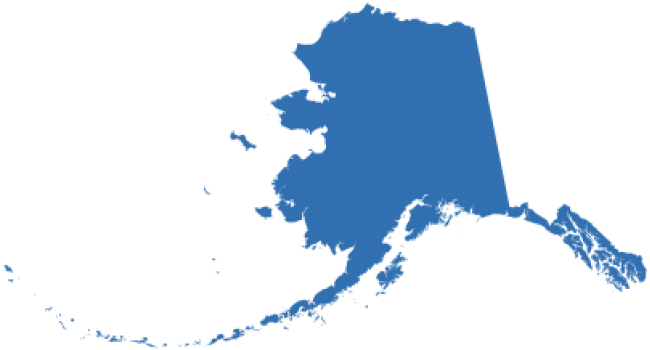
Alaska
View below:
As of the 2007-2008 school year, Alaska's schools were home to more than 17,000 English language learners (ELLs), which marks a 20% decrease from the 1997-1998 school year (NCELA, 2010). The five most common languages or language groupings among Alaska's ELLs are Aleut-Eskimo languages, Spanish, Hmong, Tagalog, and Russian (EPE, 2009).
Alaska is a member of WIDA (World-Class Instructional Design and Assessment), joining in 2011. WIDA is a consortium of states dedicated to the design and implementation of high standards and equitable educational opportunities for English language learners.
State ELL Resources
State Agency: Alaska Department of Education & Early Development
ELL Website: Key ELL documents may be found on the state's No Child Left Behind website, under the heading Limited English Proficient (LEP) Students & English Language Acquisition.
ELL Identification
Guidance: Guidance for LEP Student Identification and Assessment (PDF)
Home Language Survey: Required for all newly enrolling students. The Home Language Survey must contain, at a minimum, a version of the following questions:
Placement Exam: WIDA-ACCESS Placement Test (W-APT)
ELL Instruction
Each school is expected to use a program that is known to be sound and proven to be effective for its identified ELs as measured by Alaska's state assessments. The state does not provide any restrictions as to the type of programming that may be implemented.
ELP Standards & Assessment
Guidelines about assessment, accommodations, and ELL resources can be found on the state's ELP Assessment Website.Â
ELP Standards: WIDA English Language Proficiency Standards
ELP Assessment: WIDA-ACCESS for ELLs
Accommodations: Testing Accommodations Manual for Limited English Proficient Students
Statewide Standards-Based Assessment
Assessment: Alaska Student Assessments
ELL Accommodations: Participation Guidelines for Alaska Students in State Academic Assessments: LEP Students and Students with Disabilities (PDF)
Additional Information
Title III Information
- Alaska Title III Annual Measurable Achievement Objectives (AMAO) Targets
- SAMPLE Parent Notification of Title III AMAO Determination
- Plan of Service for LEP Students*
*Districts receiving Title III monies must submit a plan to their state each year about the programming that they are providing for English learners. These Plans of Service detail the type of programming that is to be provided and as well as the means by which each LEA will achieve its goals.
WIDA: Alaska Contact Information
Common Core State Standards: Yes
Alaska Association of Bilingual Education
AKABE supports bilingual and ESL programs at both the K-12 and adult levels and advocates for parent involvement in the education of children both at home and at school.
Alaska Public Employees Association
Since 1980, APEA and AFT individually and collectively have been working with white collar employees to assist them in exercising their right to bargain.
Alaska State Parent Information Resource Centers
The Alaska Parent Information and Resource Center (AKPIRC) connects families and schools throughout Alaska to enhance the academic achievement of all students.
NEA-Alaska is a National Education Association State Affiliate that regularly lobbies legislators for the resources schools need, campaigns for higher professional standards for the teaching profession, and files legal actions to protect academic freedom and the rights of school employees.
References
Office of English Language Acquisition, Language Enhancement, and Academic Achievement for Limited English Proficient Students. Alaska Rate of EL Growth (1997/98-2007/08). Compiled July 2010 and retrieved from http://www.ncela.gwu.edu/t3sis/state/alaska/data.
Editorial Projects in Education (EPE). "Most Common Non-English Languages Spoken by ELL Youths, by State." Perspectives on a Population: English-Language Learners in American Schools (Education Week's Quality Counts 2009 Report). Pg. 13. Retrieved from http://www.edweek.org/ew/toc/2009/01/08/index.html. January 2009.
Search Colorín Colorado
I am glad that this site is promoting the public library. Our library is getting more and more Hispanic patrons, and we have many services to offer them. Thank you.
~ Jackie M.