Teachers who work with English as a Second Language learners will find ESL/ESOL/ELL/EFL reading/writing skill-building children's books, stories, activities, ideas, strategies to help PreK-3, 4-8, and 9-12 students learn to read.
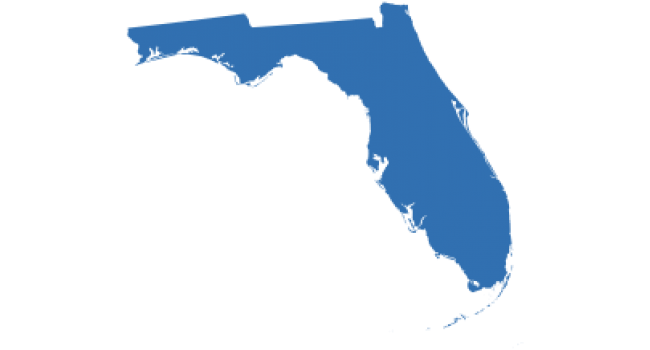
Florida
View below:
As of the 2007-2008 school year, Florida's schools were home to more than 234,000 English language learners (ELLs), which marks a 3.6% decrease  from the 1997-1998 school year (NCELA, 2010). The top five languages or language groups spoken by ELLs in Florida are Spanish, French Creole, Vietnamese, Portuguese, and Arabic (EPE, 2009), and there are over 300 languages spoken among its English learners. More information can be found on the Florida Department of Education's website.
State ELL Resources
State Agency: Florida Department of Education
ELL Website: Bureau of Student Achievement through Language Acquisition
ELL Manual: ELL Database and Program Handbook (updated annually)
Laws & Regulations
The following documents offer additional information about statewide ELL regulations:
- 6A-6.0905: Requirements for the District English Language Learners Plan.
- 6A-6.0902: Requirements for Identification, Eligibility, and Programmatic Assessments of English Language Learners
- Rule: 6A-1.09981: Implementation of Florida's System of School Improvement and Accountability
ELL Identification
Florida SEA requires that every school use a Home Language Survey as a screening mechanism for determining who should be assessed to identify the state's English learners. It requires schools to use assessments that are approved by the SEA for this identification purpose. Guidelines are outlined in the Requirements for Identification, Eligibility, and Programmatic Assessments of English Language Learners.
Placement Exam: Comprehensive English Language Learning Assessment (CELLA)
More information about placement procedures is available in the ELL Database and Program Handbook.
ELP Standards & Assessment
ELP Standards: Currently under revision (per NCELA)
ELP Assessment: CELLA
ELL Instruction
Florida districts must submit an ELL plan to the SEA that has been reviewed by parent councils (See guidelines below). Approved instructional models include:
- Sheltered – English
- Sheltered – Core/Basic Subject Areas
- Mainstream/Inclusion – English
- Mainstream/Inclusion – Core/Basic Subject Areas
- Maintenance and/or Developmental Bilingual Education
- Dual Language
In addition, Florida outlines its ESOL Performance Standards for Teachers on the Department of Education website.
Statewide Standards-Based Assessment
Assessment: Florida Comprehensive Assessment Test (FCAT)
ELL Accommodations: Learn more from the FCAT website and the annual test administration manual.
Additional Information
NCELA: Title III Information
Common Core State Standards: Yes
Central Florida TESOL is an organization committed to the promotion of the scholarship of Teaching English to Speakers of Other Languages and English Language Learners in Central Florida and beyond.
Florida Center for Reading Research
The Florida Center for Reading Research conducts basic research on reading, reading growth, reading assessment, and reading instruction; disseminates information about research-based practices related to literacy instruction and assessment for children in pre-school through 12th grade; and conducts applied research that will have an immediate impact on policy and practices related to literacy instruction in Florida.
Florida Education Association, a statewide affiliate of the American Federation of Teachers, educates the public and supporters of public education to build a consensus for standards of excellence in our educational system.
Florida State Parent Information Resource Centers (Clearwater, FL)
Family Network on Disabilities of Florida, Inc. is a statewide resource provider and network for people who may be at-risk, have disabilities, or have special needs, as well as for their families and concerned citizens.
Florida State Parent Information Resource Centers (Tampa, FL)
The mission of the Florida PIRC at USF is to implement successful and effective parental involvement programs and practices that lead to increased student academic achievement and strengthen partnerships among parents and educators to meet the educational needs of children.
Sunshine State TESOL is committed to building a community of professionals teaching ESL (English as a Second Language) in the state of Florida.
References
Editorial Projects in Education (EPE). "Most Common Non-English Languages Spoken by ELL Youths, by State." Perspectives on a Population: English-Language Learners in American Schools (Education Week's Quality Counts 2009 Report). Pg. 13. Retrieved from http://www.edweek.org/ew/toc/2009/01/08/index.html. January 2009.
Office of English Language Acquisition, Language Enhancement, and Academic Achievement for Limited English Proficient Students. Florida Rate of EL Growth (1997/98-2007/08). Compiled July 2010 and retrieved from http://www.ncela.gwu.edu/t3sis/state/florida/data.
Search Colorín Colorado
Your website is fantastic! It has so much valuable information all in one spot. Thank you!
~ Kirsten C.