Hawai'i: ELL Resources
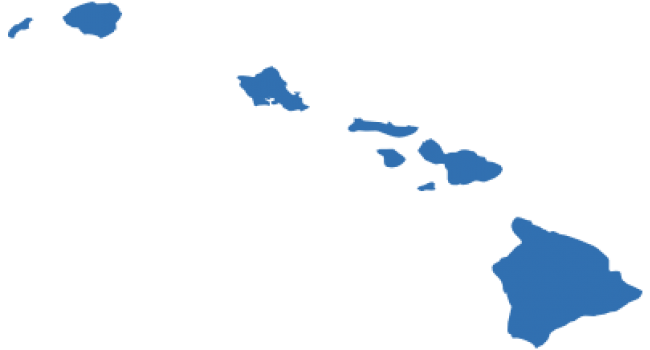
There are 32,000 English language learners in Hawai'i. More than half of them are considered "active" ELs, while the rest of the students are monitored or former ELs. In recent years, the most common five languages spoken by ELLs in Hawai'i have been Ilokano, Chuukese, Marshallese, Tagalog, and Spanish. (U.S. Dept. of Education, National Center for Education Statistics)
To learn more about Hawai'i's diverse ELL population, see this data report from the Hawai'i Data Exchange Partnership.
Hawai'i is a member of WIDA (World-Class Instructional Design and Assessment), joining in 2009. WIDA is a consortium of states dedicated to the design and implementation of high standards and equitable educational opportunities for English language learners which offers states programming for identifying and annually assessing the English language development of its English learners.
Note: For additional state-by-state data and information, see New America's English Learner Accountability Hub.
State ELL Resources
Hawai'i State Department of Education
- State ELL Website: English Language Learner Program
- Multilingual Resources: Multilingualism in Hawai'i
- Multilingual Certifications: Hawai'i Seal of Biliteracy
Related resources
Statewide Organizations
Books and Booklists

Note: Regulations change with time. These guidelines were compiled in January of 2012 and updated in May 2022. If you see something that needs updating, please send an e-mail to Colorín Colorado. For more detailed information regarding ELL guidelines and policies at the state and federal levels, please see the following:
References
U.S. Department of Education. Our Nation’s English Learners. Most Common Non-English Languages Spoken by English Learners.
Most Popular

ELL News
- How Bilingual Books Are Helping Pacific Islander Students Learn EnglishHonolulu Civil Beat | December 10, 2021
- What's Behind Hawaii’s Rising Test Scores for English LearnersHonolulu Civil Beat| November 22, 2019
- Code Switch: Saving the Endangered Hawaiian LanguageNPR| October 15, 2019