
The following strategies offer tips for thinking creatively about how to work with community partners and identify the most effective partnerships for your school community.
Supporting immigrant families
For related ideas, see the following:
- Ten Strategies for Supporting Immigrant Students and Families
- How to Support Immigrant Students and Families: Strategies for Schools and Early Childhood Programs
17. Build partnerships with the local community
Download PDF versions:
A. What you need to know
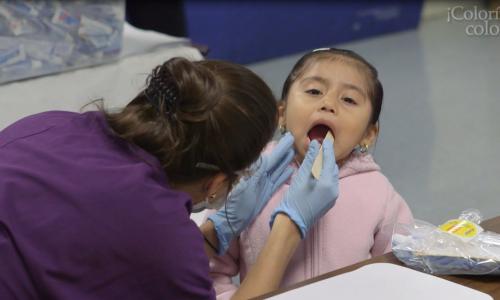
Community organizations are a valuable ally in engaging ELL families, whether it's by providing key services such as interpreters and medical care or educational opportunities such as GED, ESL, and citizenship classes.
These partnerships can benefit your family and your partners alike, and they may lead to great opportunities for your students as well!
B. Reflection
Have you built any relationships with organizations in the community? If so, what are the successes and challenges you've experienced? Which social services do your families need most?
C. Strategies
- Consider offering local organizations free space in your school as a way to encourage them to bring their services closer to your families (Houk, 70).
- Ask your families which organizations they think would make good partners for the school community and which issues are of concern to them.
- Find out if your district has a community education department that might be able to support a partnership with a local organization.
- Invite members from the community to inform parents about their services, such as a local librarian, a nurse, or a firefighter.
Note: When inviting guests from the community to the school, assure parents that identification will not be checked and explain that they do not need to show proof of legal residency to sign up for a library card.
D. Examples
- Christine Pearsall from New York shares the following on the National Education Association's website: "Our school hosts monthly Latino Family meetings - hosted and conducted entirely in Spanish by Spanish-speaking staff. The turnout is incredible every time. We discuss issues of concern to the parents and community, as well as periodically bringing in outside speakers (i.e. reps. from the library, Census bureau, etc.)." She also recommends using students from local adult ESL programs as translators in these informal settings as "it helps them practice English, get extra credit for themselves" and support their fellow country people (Flannery, NEA.org).
- Highland Elementary School in Montgomery County, Maryland was chosen as a Blue Ribbon turnaround school by the Maryland State Department of Education in 2008. Part of its success, according to school principal, was its increased inclusion of the families. According to The Washington Post, "The school positioned itself as the center of its community, offering weekend soccer tournaments, English and computer classes for parents, and an array of other community services, from housing assistance to mental health counseling (de Vise, 2008)."
Resources: Immigration topics
- Create partnerships with community organizations related to immigration issues
- Connecting Immigrant Families with Legal Support and Advice
18. Get to know your neighbors
A. What you need to know
Changing demographics can lead to tensions in the local neighborhood. (Think Clint Eastwood's character in the movie Gran Torino.) You may find it very productive to build a stronger relationship with your school's local neighbors, for your sake and theirs as well!
B. Reflection
What is your school's relationship like with the local community? If your local demographics are changing, what is the community's response to that change? What are some of the needs of your local community? What are the social/emotional/health issues your students face that community agencies might be able to help with?
C. Strategies
- Look for ways that students can contribute to their neighbors (especially those who have young children or the elderly) by doing neighborhood clean-ups and volunteer work.
- Inform local neighbors about the opportunity to tutor, volunteer, or donate used goods to the school and ELL families.
- Look for places where interests and activities overlap. Consider posting a community board where everyone can post what they need or can offer.
- Look for fundraising opportunities, such as a local yard sale that raises money for a new parent center.
- Tell the community about the challenges your ELL families are facing. For example, if you have a new group of refugees arriving, collaborate with their placement agency to collect household items, furniture, and winter clothing.
D. Examples
- When the Extreme MakeoverTM show came to Buffalo, NY, the students at Kevin Eberle's school took on an "extreme" neighborhood clean-up and food drive, raking leaves for the neighbors and collecting a record-breaking 85 tons of food. Their efforts did far more to change the attitude that local residents had about the school than any meeting could have done, and they attracted great publicity for the school's students.
- Following the 2010 Haitian earthquake, the phones at Evans High in Orlando, FL began ringing off the hook and the office was filled with visitors as concerned neighbors asked how they could help the school's more than 600+ Haitian students and families.
Video: How we partner with our neighborhood association





Add new comment