
Seasons and Cycles: American Indian Heritage

The titles on this booklist highlight Native celebrations of different seasons and all of the beauty they each have to offer.
Other Resources
Find more American Indian/Alaska Native (AIAN) titles through:
- Colorín Colorado's AIAN Booklists and Book Finder
- American Indian Youth Literature Award
- Indigenous Reads Rising (We Need Diverse Books)
- Native Children's and Young Adult Books and Resources (Cynthia Leitich Smith)
- American Indians in Children's Literature (Dr. Debbie Reese)
Alice Yazzie's Year
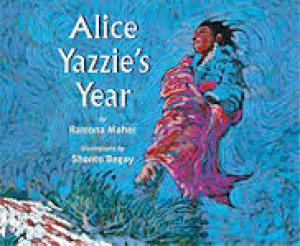
Product Description: Alice Yazzie is eleven, going on twelve, and with each month that passes she is beginning to see and feel. In January, she carries the smallest lamb into the hogan, because "He's all new and starry. He's too new to be cold." And in December, Alice is sure Grandfather Tsosie has made her a bracelet, "Blue and silver-the way the world is." An afterword by Diné (Navajo) educator Carl N. Gorman provides insight into Diné culture and symbols in this award-winning title.
All Around Us
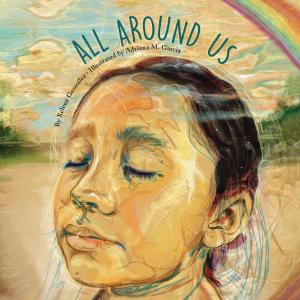
Grandpa says circles are all around us. He points to the rainbow that rises high in the sky after a thundercloud has come. Can you see? That's only half of the circle. That rest of it is down below, in the earth. He and his granddaughter meditate on gardens and seeds, on circles seen and unseen, inside and outside us, on where our bodies come from and where they return to. They share and create family traditions in this stunning video adaptation of the Pura Belpré award-winning exploration of the cycles of life and nature.
Baby Learns About Seasons

"These seven beautifully illustrated bilingual board books for the very youngest picture-readers show Baby learning — by watching and helping — the things Diné babies learn. In Baby Learns About Seasons, Baby watches the changing seasons and learns about bottle-feeding the lambs and preparing the field for planting in the spring, gathering corn pollen and picking peaches in the summer, catching falling leaves and harvesting piñon nuts in the fall, and chopping wood and listening to stories in the winter." — Oyate
Birchbark House
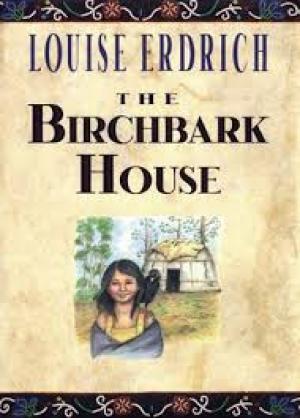
Opening in the summer of 1847, this story follows an Ojibwe family through four seasons; it focuses on young Omakayas, who turns "eight winters old" during the course of the novel. In fascinating, nearly step-by-step details, the author describes how they build a summer home out of birchbark, gather with extended family to harvest rice in the autumn, treat an attack of smallpox during the winter and make maple syrup in the spring to stock their own larder and to sell to others. — Publishers Weekly
Celebrate My Hopi Corn

"I am a kernel of Hopi corn. I have many sister kernels on my ear of corn. We grow under the warm sun." Celebrate my Hopi Corn written in Hopi and English by Hopi language teacher Anita Poleahla is the story of how corn is planted, cultivated, harvested and prepared for use in the Hopi home. The colorful illustrations by Hopi artist Emmett Navakuku describe the changing seasons and daily activities in a Hopi village.
Come and Learn With Me
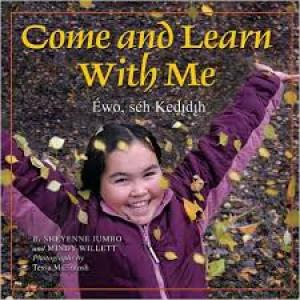
"Sheyenne is from a small Dene community in Trout Lake, North West Territories. Readers will learn about diverse activities during harvest time, such as preparing moose meat and the hide, making birch bark containers, gathering plant medicine, singing songs, and telling stories…Sheyenne leads an enjoyable journey as she shows readers her community of teachers — her family — while she learns about her language and culture." — CM Magazine (The Land Is Our Storybook)
Did You Hear Wind Sing Your Name?: An Oneida Song of Spring
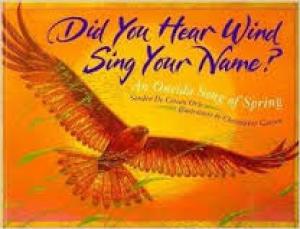
Orie's celebration of Spring is full of imagery reflecting Oneida traditions. Structured as a series of questions, the song/poem explores the sensations, emotions, and spiritual experiences connected with the season: a hawk circling in the sky; the Three Sisters (corn, beans, and squash) sending out their green shoots; the first wild strawberries…An author's note explains the significance of the various symbols depicted. — School Library Journal
Four Seasons of Corn: A Winnebago Tradition
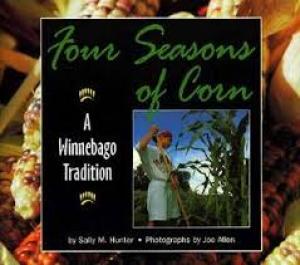
For almost 20 years, author Sally M. Hunter and her Hochunk family have processed corn in the backyard of their city home. The labor intensive tradition has been a curiosity to her neighbors in St. Paul, so this book, writes Hunter, "will solve the mystery of what those Indian neighbors have been doing in the yard all these years."…It carefully explains the importance of the Winnebago food tradition, adding Hochunk words and related stories. — Oyate (We Are Still Here: Native Americans Today)
Fox On the Ice: Maageesees Maskwameek Kaapit (Songs of the North Wind)
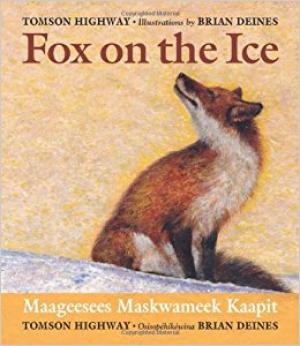
Brothers Joe and Cody are spending a chilly winter afternoon ice fishing with their parents. Cody is helping Papa fish, while Mama and Joe doze in the sled. Suddenly the sled dogs sit up and sniff. A fox is across the lake, her fur as bright as flames. The sled dogs give chase, pulling Mama and Joe along on a wild ride. Written in both English and Cree, Fox on the Ice is a wonderful, lyrical story of celebration from award-winning author Tomson Highway, capturing a passing way of life for future generations.
Gray Wolf's Search

In this wonderful original tale, a young boy is told by his uncle, the village shaman, that his role in their clan and tribe depends on his finding and getting to know a very important person. Gray Wolf journeys through the woods and seashore around his home and through the seasons for a full year in the course of his search. Through conversations with his brothers and sisters in the woods and waters — Bear, Eagle, Whale, Beaver, Owl and Wolf — Gray Wolf makes a wonderful discovery about the value of each and every one of us.
Greet the Dawn: The Lakota Way
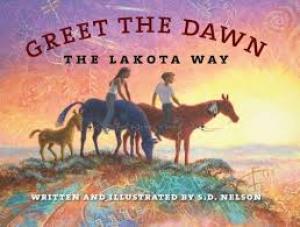
Dawn is a time to celebrate with a smiling heart, to start a new day in the right way, excited for what might come. Birds sing and dance, children rush to learn, dewdrops glisten from leaves, and gradually the sun warms us. Each time the sun starts a new circle, we can start again as well. All these things are part of the Lakota way, a means of living in balance. Through his artwork and verse, interspersed with the Lakota language, S. D. Nelson offers young readers a joyous way of appreciating their culture and surroundings.
Powwow Summer: A Family Celebrates the Circle of Life
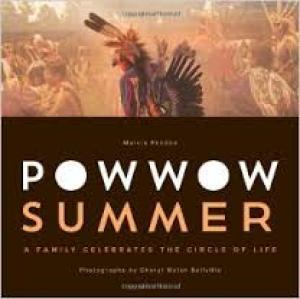
Product Description: Marcie Rendon follows Sharyl and Windy Downwind and their children as they travel from their home on the Red Lake Reservation in Minnesota to powwows all around the region. At ceremonies and in daily life, Windy and Sharyl celebrate Anishinaabe (Ojibwe) culture by teaching their children traditional skills, dance steps, and lifeways, all part of the circle of community and the seasons and life.
Rabbit and the Bears (Grandmother Stories)
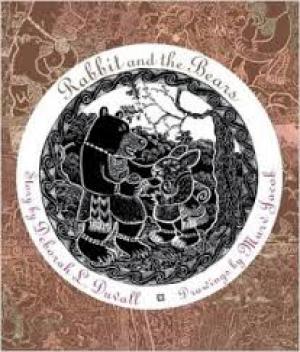
Product Description: Ji-Stu the Rabbit doesn't spend the beautiful autumn days gathering food for the winter like some of the animals. Instead he travels with his friend Yona the Bear to Mulberry Place, the magical high mountain homeland of the bears. On the way to the mountains the two friends encounter a hunter. Soon Ji-Stu witnesses the magic powers of Lake Ata-Gahi, which can heal the wounds of animals but is invisible to humans. As he sings and dances with the bears, Ji-Stu learns the magic of friendship as well as the magic of the lake.
Remember

In simple and direct language, U.S. Poet Laureate Joy Harjo, a member of the Mvskoke Nation, urges readers to pay close attention to who they are, the world they were born into, and how all inhabitants on earth are connected. Michaela Goade, drawing from her Tlingit culture, has created vivid illustrations that make the words come alive in an engaging and accessible way.
Seasons of the Circle: A Native American Year

From Maliseet hunters following moose tracks in the snow in January to a Lakota elder's winter tales during a cold December evening, this lyrical tribute to American tribal nations cuts across the seasons…Bruchac's prefatory note introduces the traditions and cycles comprising many Native American lives, and an appended section explains each illustration. Also included are a map locating the various tribal nations and a chart listing the name of each month as it is known by each of three American tribal nations. — Booklist
The Apple Tree

A Cherokee boy plants an apple seed, and as soon as a seedling appears he can see the apple tree it is meant to be. But the little apple tree isn’t so sure. Young and impatient, it begins to doubt its calling, especially after apples fail to appear that first fall. How can the boy convince the tree to give the seasons the time to work their magic? Story in English with Cherokee translation.
The Game of Silence
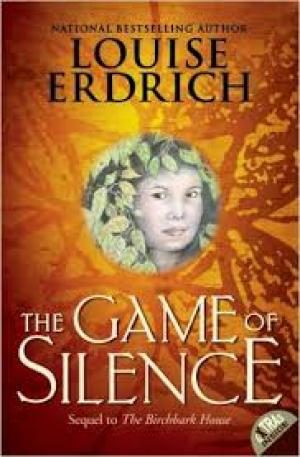
Like its predecessor The Birchbark House, this long-awaited sequel is framed by catastrophe, but the core of the story, which is set in 1850, is white settlers' threats to the traditional Ojibwe way of life. Omakayas is now nine and living at her beautiful island home in Lake Superior. But whites want Ojibwe off the island: Where will they go? In addition to an abundance of details about life through the seasons, Erdrich deals with the wider meaning of family and Omakayas' coming-of-age on a vision quest. — Booklist
The Sockeye Mother
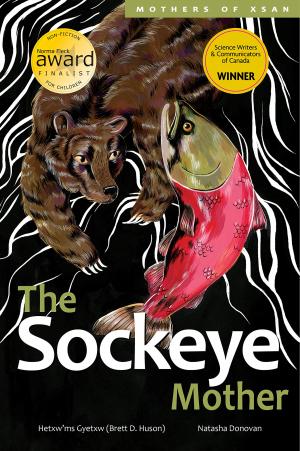
To the Gitxsan people of Northwestern British Columbia, the sockeye salmon is more than just a source of food. Over its life cycle, it nourishes the very land and forests that the Skeena River runs through and where the Gitxsan make their home. The Sockeye Mother explores how the animals, water, soil, and seasons are all intertwined.
Thirteen Moons on Turtle's Back

To many Native Americans, the 13 cycles of the moon represent the changing seasons and the passage of time. Each moon has its own special name that, while varying among the tribal nations, is consistent with the legend that the 13 scales on Old Turtle's back hold the key to these moons. The authors present 13 poems that take readers through the year, from the "Moon of Popping Trees" — when the "cottonwoods crack with frost" — to the "Big Moon" of the Abenakis. — Publishers Weekly
When the Shadbush Blooms

Product Description: "My grandparents' grandparents walked beside the same stream where I walk with my brother, and we can see what they saw." Today when a Lenape Indian girl ventures to the stream to fish for shad, she knows that another girl did the same generations before. Told through the cycle of seasons by Traditional Sister and Contemporary Sister, this is a book about tradition and about change. Includes an afterword about the culture and history of the Lenni Lenape (formerly known as the Delaware Indians).
Winter's Gifts: An Indigenous Celebration of Nature
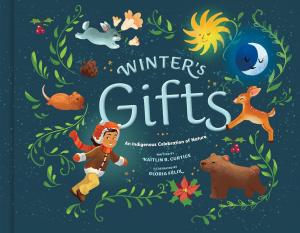
Winter’s Gifts is the tale of a young Potawatomi girl named Dani whose family celebrates the darkest season of the year by treasuring the slowness that winter brings. Dani’s schoolmates think it’s silly to think that Earth gives us presents, but on a magical snowy day, her family and Creator give Dani the courage to teach her friends about the gifts of winter — resting, remembrance, and gratitude. Can Dani help them receive winter’s gifts?
Wish Wind

A young boy wishes that Winter's cold, snow, and ice could be relieved by Spring and the warmth of New Sun. Then, he wishes that Spring be changed to Summer. Each time Boy complains, Wish Wind reluctantly grants him his wish. The Wish Wind points out our longing for change, with an unspoken reminder that enjoying each moment for what it offers now is a precious part of life. — Oyate


Multicultural Literature
See more great related resources and videos in our Multicultural Literature section!