Pat Mora
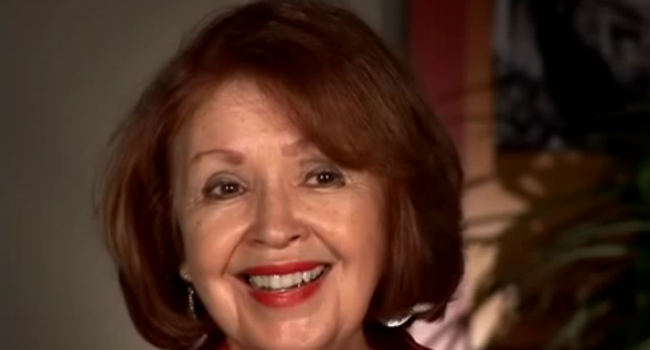
Pat Mora is a Mexican-American author, poet, and advocate for the Hispanic community. Many of her books are bilingual, presenting topics affecting Mexican-American families and culture. She is also the founder of Children's Day/Book Day (El día de los libros/El día de los niños), known as "Día."
In our most recent interview with Pat Mora, she discusses the 15th anniversary of "Día," as well as what she has been working on recently.
Video Interviews
Transcript
Part I: Celebrating Día 15
Día turns 15!
El día de los niños and El día de los libros (Children's Day/Book Day, usually known as Día because that's an awfully long formal name), celebrates it's 15th anniversary this April. When we started out, we were focused on one day and probably focusing a lot on celebrating people being bilingual, as in English and Spanish.
We have grown with the project; all good projects, everyone who works on it grows with it. And now we say that Día is every day of the year, so Día por Día, day by day. We are trying to link all children to books, languages, and cultures. My friends in Charlotte say Día equals Diversity in Action, and I love that, too.
I think teachers and librarians have taken that basic concept of linking all children to books, languages, and cultures and they have been incredibly creative in the activities that they use to help young people hear other languages, sometimes other languages in their own community. It's a way of honoring home languages. We cannot do enough of that in this country.
But also sometimes it's helping students hear languages they may not hear. My friends in Kentucky, for example, had people from five different language groups in the community each stand up and read to the kids a little bit in the language of the reader. And I thought that was a wonderful experience, you know, for young people.
So helping them to see that and all cultures are exciting and interesting, all languages are beautiful. A challenge in the United States remains, sadly, that young people who are not English dominant often feel ashamed of their home language. And part of Día's work is to change that sad fact.
Día nuggets
Those of us who work on Día have been working hard exploring how do we celebrate fifteen years, this fifteenth anniversary or with children, I say fifteenth birthday. I think that different libraries and different schools will celebrate in different ways. One of the things I am very committed to is community control, so that if a community wants to celebrate it on April 15th, that's fine. If they want to have a theme or a logo, that's fine.
What we are going to try to do, in terms of my website and what I'm trying to do, is we are going to produce fifteen lists, each will have fifteen tips to help teachers and librarians and parents implement the celebration. So for example, the first one, and we're calling them Día Nuggets, so we're going to have fifteen Día Nuggets, and in my case they are turquoise nuggets since I am here from New Mexico.
So the first one is fifteen steps for planning your Día event. Many times when I'm out speaking, people will say well, "I hadn't heard about it, it sounds like a good idea, tell me what to do." And I feel, ah, we've worked on this so much, it's been on the web, it's been on the blog, it is housed at ALA, REFORMA is very involved. But still what people want to know, because people are so busy, is, "Tell me what to do," and so that's what we are going to try to do.
So we have fifteen ways, fifteen steps for planning your Día event that is posted on the blog, it will be archived on the website. We will have fifteen possible funders, that is, kinds of people for you to think about, everything from your local newspaper to maybe some of the mega-chains who can all contribute in some way.
Celebrating Día around the country
I am lucky that I've seen some incredible Día events. I can be distressed sometimes when the Día event is too much about the mariachis or the maracas and not too much about literacy. I want to see young people have a good time, I want to see very diverse families having a good time. But it's more than just the face painting, it's really having literacy focused activities and showing kids, "Gee, literacy is fun!"
And that can be through storytelling, it can be through having children do their own books, have tee-shirt contests, but it's all book-related — book walks instead of cake walks.
One memory that does come to mind, I think it was last year, that I was in Detroit, a city that has had a lot of problems economically. And I think it was a part of town that they referred to as Mexican Town. And they had planned a Día event and I was fascinated by the story.
The Mexican consul had brought Día to the city. He had been in Austin, Texas and had seen Día and he said to me, he was a very quiet and serious gentleman, and he said, "You know, I got here and I felt, here are all these social service agencies, there was a university involved, there were some schools and he said, 'How am I going to get them to work together?' I am going to tell them that we're going to put on a Día de los niños event."
And so he said because they all could buy into that, it was the whole idea of celebrating children, etc. Well, what they created, which by the time I got there, they had grown so large that it was at a park, it was a very low-income community that lived around the park. Nothing was sold at the Día event. People could give out bottles of water, people could give out fliers about their social service agency, there was a puppet show, there was music.
But it was like being in another country, in a way, in the sense that people were strolling through the park and they did have strollers, literally, and little ones. Everybody felt at home. Nobody had to have money. The Mexican consul was giving out a lot of books, but other people were giving out a lot of books, too.
So it was rethinking, how do we put children and literacy at the center of a celebration where families feel, "I belong?" Dia's challenge, sometimes, in working with some more traditional public libraries, I like to think Día is an easy bridge in. The librarians have to be willing to go over that bridge sometimes and go out and find out well, "Where could I put the signs about Día?" That's where having the diverse committee can help you, right?
But also it's a way parents can hear the music, they can see the piñata. I was in Galveston, Texas last year and they had really done a wonderful job. I mean, they had a lot of free food, they lined up like 15 piñatas. I was having a particularly good time watching an Asian American family, multi-generation — so the grandparents, the parents, and the little ones — and the grandparents were having the best time watching these little ones whack the piñata, you know.
So that's the kind of thing. And they had sort of a scavenger hunt in the library that was very carefully thought out. It was a way to let new patrons discover, "Gee, there are computers, gee, there are videos" and every part of the library you visited successfully, I think they tied it to Easter. And so you got something for your little basket, everybody got a free book.
And at the end of this glorious event, I e-mailed the organizer and I said "Well, do you think you're going to do this again?" And she said, "How could we not?" which was a great answer because they had realized that they had patrons who were very interested, and then the next year they will have more.
Special Día events
When people think about Día, often they think about the Southwest, so they are not surprised to see Día in Texas or California. I was in North Carolina for some Día events actually twice. They were interested, I think, in celebrating Día, and these were both schools and libraries, because of their growing Latino population.
And they had been really clever. One of the touching moments for me at a school, and I would like to see more schools celebrating Día, it was a teacher who had had her students memorize one of my books. I told them they were smarter than I was because I would not be able to do the book without holding the book. And half the second grade did it in English and the other half of the second grade did it in Spanish, and to sit there and listen to that as part of a Día celebration was so moving for me.
The Día planning committee
One of the big challenges, I think, is really creating a diverse planning committee. As part of Día's work, and I do think of it as a call to action, I don't think of it as just another literacy celebration, which is not to diminish any of the others, but I think of it as a call to action. It is asking schools and libraries to take a really good look at whether they are reaching all of their service population.
Do all the parents, whether they speak English or not, whether they have a nice middle class life or not, feel welcome at the school and by forming a planning committee, that does include parents, some university students, the person in the community who works on summer reading clubs. Different ways that we are bringing people together, different kinds of voices who help plan this celebration for our kids.
So what does it mean if I, as the head of children's section of a library, say "Well, I'm ready to have my Día event, I've thought about it, I know what I want to do. And Pat, (me) is saying well, how about forming a diverse committee?" And suppose if you form the diverse committee and we have some parents and maybe we have some teachers and ideally I would like to see us have some university or some high school students, so we are getting some age diversity, we are getting some ethnic diversity. I talk about faith communities.
There are different ways that we are creating a committee to say how do we celebrate linking all children to books, languages, and cultures? Well, if I am a well organized librarian, I might say well, you know, here's my timeline. What a diverse committee requires is that I have to give up some control and as a high control person, I am the first to say that is really difficult. But it may well be the Vietnamese grandfather who will have the best ideas of how to get the kids to come.
And if my goal is to really involve all the aspects of my community, my school or my library, then I want all of those aspects represented in my committee and I have to be willing to listen.
Getting started
I hope that people whose communities have not begun to celebrate Día will go to their public library and will go to their neighborhood school and ask the question, do we celebrate El Día de los niños in our community and, if not, how can we get it started? And I am stressing so much that though its name started in Spanish, you know, El Día de los Ninos/El Día de los Libros (Children's Day, Book Day), I really want to see schools and libraries put those words in all the language spoken by the children at the school or library that — I mean, this is our service population and we want to honor that.
And I think that people will be amazed at the response of communities that may never have felt totally embraced by these educational institutions. There are still so many people who feel that it costs money to check out a book, they have not grown up in countries where libraries are free. I saw a funny sign — again, going back to North Carolina where a librarian had put up a special sign before the holidays and she said "Up to January 1st, library cards: free."
Well, of course, library cards are always free. But she was just trying to think of ways to bring people who may look at that building, as in Tomás and the Library Lady, but feel intimidated by it. So it's interesting, we have teachers and librarians intimidated by bilingual books and we have families who are bilingual in many languages in this country who are intimidated by our very often serious and sober looking buildings and by the very professional and efficient people who work there. But ideally, we all care about the same children and we just need to be creative in working together.
Book Fiesta
It was a wonderful surprise to me one day when an editor, Adriana Dominguez, who was then at Harper said to me, "You know, we ought to think of a book about Día." We have not seen the diversity in publishing that is really necessary for the transformation that I talk about. And I have written about this a lot, I have spoken about it a lot, I'm not seeing a tremendous amount of movement.
So we need to see diversity in publishing because someone selects the books that will be published, someone selects the books that will get the full page color ad in important publications. People on award committees decide what books will have a nice seal of approval. Children's books sound very sweet and they are, but it is a very complex and sadly sometimes political process. That's just the nature of life.
So it was such a thrill that there was actually a Latina in publishing and she said, "I would really like us to think about a book about Día." And initially she proposed, did I want to think about a story? Well, I had already written Tomás and the Library Lady and as an author, one of the things you fear, the longer you are an author, at least for me, there is the terror that I would repeat myself.
And so I am always trying to think well, is that something I have already done? So I said, "I just don't know that a story is going to work for Día," but early on, very early on in Día's life, the idea came to me in '96, first Día celebrations were held in '97, this was probably right around in there that a librarian in Texas said to me, "You need to write a song."
And so I ended up doing sort of a little Día song and I thought well, maybe we could take that song as a beginning point and I could begin to expand that. And it became Book Fiesta, so that's how it started.
I was thrilled that Ráfael López, who is so amazingly talented, was chosen to illustrate the book. This was our second book together, so he had also illustrated Yum! ¡Mmmm! ¡Qué Rico! And I knew, I have said to Rafael, "I would love to live in your imagination, you know." As I began to see the images from Book Fiesta, I was just amazed, you know. A picture book writer is very dependent upon illustrators. I joke that when I visit schools and children find out that I don't do the illustrations, they wonder why I was invited, and I can understand that, you know, one of the joys of picture books is the illustrations.
So he was so incredibly inventive. And I have numerous pages in the book that I absolutely love, sometimes because of the bright color, but also Ráfael has this real tenderness to his work. And there is a scene where a little girl puts her hand down into the water and there's also a little girl looking up from the water and they touch on that water, their fingers touch. And that just such a beautiful detail.
The way both the sun and the moon look down in such a comforting way on these children. And I thought to myself, "You know, this is what the world should be like." We should all be looking at our children with that kind of protective smile that in Book Fiesta both the sun and the moon have towards these children.
Part II: Bilingual Books
Going out of the comfort zone
Last year I had an interesting experience. I was talking to teachers and librarians about using bilingual books. And in looking at the audience, I did not know how many of the people in the room were bilingual. That's always risky because we can't judge by looking at someone and knowing whether they are bilingual or not.
But I happened to ask the group, I said, "I want you to be honest, I don't want you to be worried about saying the right thing, how do you feel about bilingual books?" And I was so grateful to the person who raised her hand and said, "They intimidate me." And I said to her, "I really applaud you for your honesty; why do they intimate you?"
And she said, "Because I'm the person in charge, I should have the answers. I'm looking at a book where I can't pronounce half the words in the book." Now that is such a key issue because we know that those of us who believe that bilingual books are important, and for a minute I'm going to focus on English/Spanish, we know these books are important because we know the size of this population, and it is growing.
We also know that the teaching and the library population does not reflect the diversity of our student. If they are not ordering these books and are not using those books, those books will not be published. And I think that this is a very complex challenge that I don't hear discussed at teacher and librarian conferences.
How does someone who really wants to work with their students, but who is not bilingual, how does that person really learn effective ways for using bilingual books? Now as a group we brainstormed and people had lots of suggestions, but that was a very particular session. And I would like to see the publishing community, the community of educators, saying we need to talk about this.
If we are committed to these young people, whether they are speaking Arabic at home or Japanese at home, how are we going to honor those home languages, how are we going to incorporate them? And one of the ways, of course, is that teachers and librarians have to be willing to put themselves in difficult situations immersing themselves in these cultures. And usually they find that so enriching and are so grateful, but it takes going out of what we call our comfort zone sometimes.
"A wacky idea"
One of the joys of having written for awhile is that I can let myself follow my wacky ideas. And Yum! ¡Mmmm! ¡Qué Rico! is an example of a wacky idea. I wrote both for adults and children and I had taught a class on poetry for adults one summer. And one of the things I had asked each of the students to do is to bring a book of poetry that he or she loved and then we would sometimes use one of the poems to begin the class.
So one of the students brought a beautiful book of haiku and I thought, I looked at it and I thought, "Oh, that is such a beautiful book, I think I am going to order it." I had never really thought about writing haiku for children. So I ordered the book and I began looking at it, so that was one element.
At the same time, I have always been sort of fascinated by indigenous cultures, indigenous foods, indigenous music. I had a fellowship years ago that allowed me to spend a little time, not as an anthropologist, but as a writer exploring how cultures are conserved and why cultures are conserved and their resilience. So all of a sudden one day I thought, "Well, what if I did a book in haiku about the foods of the Americas?"
And I happened to have a couple of books on the indigenous foods of the Americas. And so I just began playing with this wacky idea and luckily Lee & Low Books went along with it and luckily Rafael illustrated it. So it was a great joy. Then taking a book like that and putting it into Spanish was a significant challenge.
Other people worked with the Spanish with me. I am bilingual, but certainly English dominant. I have no memory of not being bilingual. But all my professional life, as I tell audiences, you know, the bulk of my professional life has been spent in English and is spent in English. So I always like someone who is Spanish dominant to be involved with the Spanish part of a book.
I know enough to be difficult and I worked with a translator once who said "Well, you are double trouble." But I know what I want it to be and if I have written it in English, I want to make sure that the Spanish is not sort of a sad example. I want it to have the same kind of life that it does in English, and that's the challenge.
"My Family/Mi Familia"
I tell audiences that I have a list in my computer of the books I hope to write. And the order of those books changes and all of a sudden one kind of rises to the top. Also people often come up and say to me, "I have an idea for your next book," a comment that can usually make me a little nervous because I think I have ideas, but I have gotten wonderful ideas from other people.
Some years back, a woman in Ft. Worth who has something called The Red Oak Foundation, funds only in Ft. Worth, took me out and took me to her office, talked to me about her commitment to working with low-performing schools in Ft. Worth and creating literacy sessions for parents and children, and parents would receive a hardback bilingual book. She herself is not bilingual.
She was very committed to the notion that all children deserve beautiful books in their hands. She said to me, "I would like you to think about doing some easy-read bilingual books because even though you have done some bilingual books, they can sometimes have quite a bit of text and that can be difficult for read-alouds, both at school and at libraries."
I was very honest with her and I said, "You know, I encounter so much rejection — and I do — the whole idea of tackling a whole new area where I'm going to experience rejection again, it's difficult for me to walk that road." And she said, "Well, we are prepared to help, we'll try to talk to publishers." And I said, "Well, I can't believe that there aren't easy-read bilingual books at bookstores," and she said, "Well, go look."
So I was doing a visit to Denver soon after and I went to the megachain in downtown Denver and I said to the young woman in the children's department, "Where are your bilingual easy reads?" And she said, "Well, if we have any, they are in the foreign language section." I said, "But this is Denver." And she said, "Well, I don't know that we have any." And indeed I realized that there weren't.
What was happening is that this particular funder was having some publishers take existing books and put the Spanish, so it would be ball, and they would add pelota, etc. I ended up proposing a series that a publisher did pick up, this My Family/ Mi Familia series, one family that children would see in four books — very easy read.
I would say this series is having a very hard time surviving. When it first came out, teachers and librarians would say, "Oh, this is going to be great, we have such need for this." But it goes back to what I talked about earlier in the sense of many teachers and librarians are intimidated about using bilingual books. So the series exists — if it doesn't sell well, it never goes into paperback. If it doesn't sell well, publishers say "Well, we tried bilingual books, they don't sell."
It's very hard for people to realize that children's books are a business. If you are an editor and you are very committed to children who speak Spanish at home, who hear Spanish and you as an editor choose to publish some of those books and the books don't sell, maybe then you're not an editor anymore. So I am delighted when I see people buying the series, but I have to say I am nervous about the series.
Gracias
I am not sure when, I began to think about a book on gratitude. I knew that there had been a time, probably about five years ago, when in adult books, there were a number of books that were very popular about simplicity, about being grateful for what we have and I thought well, that might be an interesting topic for a children's book.
I began with this idea of a boy being grateful for the little things in his day. And I think the reason I chose a boy is that I do visit some schools in the course of a year, and I'm always fascinated by children's questions. I love their questions, I always learn from them.
And I remembered about that time that some child had said, "Do you think you write more books for girls than for boys?" And so right away I went home and I thought, was that true? Well, no, I could think of Tomas and Pablo's Tree and I could think of the boy in The Gift of the Poinsettia. But I wanted to be sure because I have both two daughters and a son. I wanted to be sure that I was writing for both of these audiences.
I like to think that all books are for both, but we know that girls are going to like books with girls as main characters, boys tend to be a little partial to books with boys as main characters. So I had pretty much decided it was going to be a boy. And I pretty much knew that it was going to be a sweet, what I call a sweet boy. And I have a grown son who is and was a sweet boy. Choosing the illustrator, and I was so grateful to my editor, Louise May at Lee & Low Books who sent me wonderful examples of illustrators and I would say "Oh, but the boy doesn't look lovable."
I wanted children to see a boy that they were going to be able to really like because this boy was going to be talking to them from his heart about the little things in his day, the ladybug, his mother finding his homework in the trashcan. So I needed him to be a boy that would be appealing visually. I was so delighted that some librarians — actually, I think it was at the Seattle Public Library, who had put up a beautiful Día display, there's an interesting example.
So it looked gorgeous and it said El Día de los Ninos, El Día de los Libros. But in the display there were images of all kinds of children. It was really, really multicultural. So I said to them, let's go out there and find an illustrator for this book, so I had some of John Parra's other books and they said, "Well, how about him?" And he did very well with this book, he won all kinds of awards, he is early in his career. So I was simply delighted. And then Lee & Low said, "What if we do it as a bilingual book?," which for me is then a wonderful bonus.
Bilingual books
The decision whether a book will be a bilingual book or not is not made by me. Audiences and readers are often surprised how little power most writers have, I always joke, unless you're Oprah. And if you are Oprah, you probably have a lot of power. Now I do often get to be involved in the selection of the illustrator. At the beginning, that was not true.
Nobody asks me if I think that's a good idea for a cover, which is surprising, but they don't. Titles, sometimes people ask me what I think. But the decision whether a book will be bilingual or not is really made by the press.
A Piñata in a Pine Tree
I live in New Mexico in Santa Fe, a beautiful, beautiful place. And I hear a lot of wonderful music during the holidays — people love to go there during the holidays. And some years back I began to think about this song that is so popular in terms of traditional U.S. culture, "The Twelve Days of Christmas." We hear it, you know, we hear at malls and we hear it on TV.
And I thought, "Well, what if I took that and used images and ideas from Latino culture, broadly, broadly." And I began to play with that and was delighted that a publisher was interested, and then more delighted at this wonderful illustrator from Mexico who just did an amazing job including putting the pronunciation into the art, which was just a stroke of genius. And I have been a little disappointed that her art has not received the attention that I wished it would because I think it is just spectacular.
Zing: Seven Creative Practices
One of my new books is called Zing: Seven Creativity Practices for Educators and Students. And it is a series of fourteen letters about creativity prompted by teachers and librarians and professors who would say to me in private, "I want to do what you do, tell me how you write." Part of writing that book was to answer that question, so seven of the fourteen letters are about how we foster our own creativity.
The other reason for writing the book is that I talk about those seven practices as they relate to all of our students. So for example, if the first practice is I have to believe in my creative self, sometimes that can be hard for teachers and librarians, for most of us, right? Though we're adults and think of ourselves as somewhat poised, we can doubt our creative selves.
But the first step in sort of fostering and nurturing our imaginative side is to believe that we have one. And I tell the story in the book that when I'll say to teachers and librarians, "Well, how many of you think you are creative?" Inevitably, someone will say, "I'm organized." Well, I am organized too, and that would be my answer. I mean, it's a hard thing. We can feel almost a little arrogant about saying we're creative. We shouldn't feel that way - everyone's creative, I do believe that.
I wanted to be speaking to someone who really takes being an educator seriously. I am privileged to be around teachers and librarians who are passionate about their work, who really care about the children and the families they serve. That's not to say that all teachers and librarians may be that way, but it so happens that the ones I get to interact with are that way.
So I wanted to establish this very intimate voice and to be sharing what I think I have learned in the now almost thirty years of being a writer. I did many other things before, I was a teacher and a university administrator and a consultant, but really at a certain point I thought I love reading so much and I want to be a writer.
And I think many people in education have that desire. So I wanted to share what I had learned. And coming up with these seven creativity practices of believing in yourself, creating the time to hear yourself, gathering your materials, diving in and beginning your project, being willing to revise, sharing, and then beginning the whole process again. So thinking for myself what are the seven steps I go through or the seven practices.
Practicing creativity
The word "practice" was very important to me. We talk about the practice of medicine, right? We don't treat doctors that way, we think of them as having absolute answers. But in point of fact, as teachers, as librarians, as writers, we are practicing and we need to be practicing. One of the themes of the book is if I'm not a reader, how can I be exciting my students about reading, and if I'm not a writer.
So the challenging aspect of the book is I'm asking you to be a writer. Or, I try to stress, it could be that you want to be a painter or you want to compose songs. But I am asking you to be involved in a creative activity as a way of giving yourself energy, as a way of sharing a part of yourself with the world that maybe you have kept locked in.
And then as a way to be able to say to your students or to your patrons, well, you know when I was working on my poem the other night, I got stuck and here's how I solved it. And I talk in the book how a math teacher goes up to the smart board or the blackboard or whatever and says well, "Let me tell you how to solve that problem." And I think in the language arts and in English, we haven't done that.
I look back at my own teaching and I think I would have been a far better teacher if I had been writing when I was talking about writing. But I wanted it to suggest this creative spark that I think we have and that I think helps us to be more zestful, to sing our song. And that's what I hope is the spirit of Zing.
"The joy of sitting with a piece of paper"
When children say to me what's the best part of your job, of late my answer has been, "The best part of my work is having the quiet to write." There are many things about being a writer that are a great blessing, and that's whether I'm talking about writing for adults or writing for children — you know, very different kinds of blessings.
I think that because of Día, which is just, it's my fourth child and a big time gobbler, I have less and less of the quiet time that I cherish for writing. And I said to a group of writers recently, "I don't think people understand how I long for that time to write." And even a couple of the writers looked at me as if I were daffy, but I do long for it. I love to do it. I love to go out and speak, I derive a lot of energy from audiences, I love to see the people I write for.
But oh, the joy of sitting by myself with a piece of paper and a pen at my dining room table and feeling that I can explore a new idea. I can, if I come up with a very specific project, be firm with myself and one of the things I stress in Zing is gentle firmness, is what I call it. I try to discourage people from ever saying anything negative in their self talk, either about their writing or about how they are organizing their lives. I think that is so destructive. But I try to put things down in pencil on my calendar and if I have a very specific project, I will set a deadline for myself.
My challenge is not looking at emails in the morning, not answering the phone, feeling that the world is going to do just fine without me, the world is going to go on great when I am no longer here and being firm with myself about the books I want to write.
I often don't look at, for example children's books catalogues because I can find it so depressing. I see all of these wonderful ideas and I think, "Why didn't I think of that, why I didn't I write that?" Without the quiet, I don't think a writer can really find the sort of internal nourishment. But I also say to audiences of all ages you cannot hear your ideas if you don't have quiet. I am the kind that finds even the motor on a refrigerator difficult. I like total quiet, which makes me very weird to people, but I really do.
"Educators are optimists."
One of the big themes of my new book, Zing, and I say it from the bottom of my heart, is that teachers and librarians are important to people. It makes me so sad that in our society they are not reminded enough the importance they have. And I say that because I sat in classrooms, I say that because my children went through schools. And in Zing I say you know, when our own children are in the school or when one of ours is in the school, we are so interested in that school and in that teacher and hoping that that teacher is going to see how unique and spectacular our son or our daughter is.
But in point of fact, the amazing thing is, that given the diversity of students being served by librarians and teachers, that people are brave enough to go to the front of the room and to try to excite children about being learners for the rest of their lives.
"My mythic woman"
I am trying something totally different, writing a book with someone. I had done one early on, but this is actually, I have three adult children and one of them is a lawyer, my older daughter, and she has been interested in writing children's books. And so I said to her, "Well, what if you and I write a book together?" And I think we first came up with the idea in '07. I had seen a video of an aunt that I have written about, she is my mythic woman, and she was like a second grandmother to me. I love this woman. I always feel like I'm through writing about her, and she sneaks into another book.
So I saw this video clip in which my aunt said something very profound, that I'm not going to tell until the book comes out, about why she became a citizen very late in her life. So she was born in Mexico, comes as a teen and I talk a lot about her life in my family memoir House of Houses.
She becomes totally bilingual to the point that by the time I am a little girl, she is reading Nancy Drew books to me. And so I said to my daughter, at time when this country is wrestling with this whole issue of immigration and I fear that there is so much hatred ahead and that there is going to be a license to say shocking things given the rhetoric of this country.
So I said to her what if you and I wrote a book about this and about a little girl, the little girl will be my daughter, who did have this same aunt in her life — my aunt lived to be 94. And so we are doing it on email. I started it and then Libby, Libby is my daughter's name, Libby Martinez, she writes a little section and then I write a little section.
I said, "We won't feel any stress, we're not going to be," — I am the kind that revises constantly, so I'm sure I'm going to drive her crazy because I said well, "Let's just keep going." And then sure enough, after the third entry I said "Well, mom decided to start tweaking." So I've begun to sort of say "Well, we need to condense a little bit."
It's going to be a challenge to try to do it in a picture book, so I am going to talk to my editor and see do we want to keep it a picture book or do we want to go to maybe chapters. I don't know.
But it's just a great process. For me, you know, my daughter is adding some elements that I wouldn't think of. For example, she's a good lawyer and she said "I'm going to go on the web and I'm going to find out what are the questions they are asked." Well, that was a wonderful addition. And then she said well, "I know, she'll be 80, I'll be 8." So this was an aunt that did come over every Friday, and that will be a theme in the book, that every Friday they coach one another for their tests. And kids today understand text anxiety, so that will be sort of a sub-theme of the book.
Excerpt: "Yum! ¡Mmmm! ¡Qué Rico!"
I am Pat Mora and I am going to read the haiku, "Tomato."
"Round, roly-poly
Squirts seedy juicy splatter
Red bursts in your mouth."
Part III: Poetry for Teens
Part III of our interview with Pat Mora is divided into the following sections:
The story behind Dizzy
I have done two books for teens, both suggested by librarians. And actually the first book of poetry for children, Confetti, was suggested by a librarian who came up to me in a conference in Kentucky and said, "Why is it you write poetry for adults and you've never written poetry for children?" And I hadn't even thought about it. I went home and I thought "Well, that's a good idea, I could write poetry for children." And I have enjoyed that greatly.
Well, in the same way, a California librarian came up to me one day and said "I have a lot of Latino teens, I really don't have poetry for teens, a book that I can share with them. Why don't you put one together?" I had written my first three books for adults with Arte Publico Press at the University of Houston and so I contacted the publisher and said, "What if I selected poems from Chance, Borders, and Communion that I thought would work for teens?"
And he, like a good publisher, said "Yes, and what if you wrote six or seven new poems?" And I said, "And what if I begin the book with a letter to teens?" And so that became My Own True Name. So these were primarily poems that had been previously written — not all, but primarily.
Okay, then years passed and a librarian in Texas said to me, "Well, you've only written one book for teens, why don't you do a book of love poems for teens?" And I burst out laughing and I said, "Love poems for teens?" And she said, "Yes — you know, teens love love poems." It happened to be a year when I was visiting a lot of middle schools and high schools and so I started asking teachers and librarians as I traveled around the country and one of them said the magic sentence. She said, "Yes, boys love them, they copy them and sign their names," and I thought that was a temptation I could not resist.
My editor then said, who is Nancy Hinckel at Knoppf for that book, and she said "Well, how about using some poetic forms? Don't you think teachers and librarians would appreciate it if you used some poetic forms in the book?" And initially I thought "Hmmm…" but it was a wonderful suggestion because it meant I had to revisit the forms and then it was fun to say, "Well, here's a great form, I think I would like to use it, what topic would lend itself to it?"
Writing for different teens
As the book began to evolve, I realized that it was not just going to be about teen love as in romantic love, but it was going to be about all the kinds of intense love that teens feel, so love for parents, love for a cross-eyed cat. And then I began asking people and someone said to me — actually, it was a psychologist, I have a niece who is a psychologist on a campus, and I said "Well, what are some issues that young adults bring to you?" And she said, "Well, having a relative who is incarcerated." And I had never thought about that, and I thought, "What would that be like, to have a teen writing a love poem to someone who is in jail?"
And then thinking about a teen who had lost someone. And when I first wrote the poem about someone who had died, I was actually thinking about a teen writing about her father. And then after the book came out and I reread it, I thought well, it could also be a teen writing about another teen. I had visited a school where the librarians said to me that a group of teens had had a member of their little group die and they were kind of outcasts at the school.
So even though not all the topics were cheerful, my hope was that any class that used the book, teens would find at least one poem in the book that was about them. And so there was joy for me in sort of thinking about these different kinds of teens.
Memorable students
A group of middle school students came, I was speaking at a campus and a very resourceful teacher — I keep saying that I interact with some amazing teachers and librarians — so a very resourceful teacher had gotten a bus and they had brought the middle school students and they were learning English, and there were two really memorable moments.
One, the young boy who put up his hands and he said, "Where do you find the words?" And that was the big question I was asked in 2009, you know. I said, "Well that is the question, isn't it, where do we find the words?" And that let me go back into talking about reading and why writers are readers.
But in the front row that day, I had been told there was a young girl and it was her first day there. And I thought, "Well, what is that like?" — you know, she never looked up. And I thought, "What is that like for her to sit there hoping that she won't be singled out, hearing this day going by in English and thinking, 'Gosh, I am going to have to spend life like this.' What is that like?" It's not an experience I ever had, I was always bilingual, but I was really fascinated by her.
What was so poignant for me about that student is she is not part of the power system. So when we, as middle class adults, are in the situation where other people are speaking another language, we still have a lot of protection around us. We can get ourselves out of many situations. But to think of a teenager, boy or a girl, knowing that she is going to be in this school, this school is going to be an English- speaking school and she is going to feel foolish.
As a psychologist said to me once in Cincinnati in a bookstore, and she had a child who was handicapped and with a very marked accent, she was from a Latin American country, and she said, "No one hears my intelligence here, they hear my accent." And she said, "The professional I was is gone. How do I protect my child?" And those are those very complex issues that I don't think we think about, that I feel are very important for the educational enterprise that we need to be about.
Doña Flor
Two related stories — at the end of that session, their teacher stood up and again, it was a middle school, but now teachers and middle school and high school use picture books, thank heavens. So she was holding the book Dona Flor, which is about a bigger than life, you know, she was for me inspired by Paul Bunyan.
I felt we all grow up with this huge man and I wanted a huge woman who was bilingual, but she succeeds not by force, but just by this incredible capacity she has to love. So it's a giant woman with a great big heart. So this teacher is holding this book and she looked at me and she said, "We love Dona Flor because she is so big and we feel so small." Now what a statement, you know. Where are those students feeling so small? They are feeling small because they speak Spanish.
The other Dona Flor story, which is fairly fresh, is a teacher educator, so she is working with people who are going to be teachers, and she stood up in an audience and she said to me, "I love your book Dona Flor and I am working with students who are primarily" — and I am quoting her words — "they are primarily white and they have trouble with Dona Flor."
And I said "Why?" And she said, "Well, I don't know." And I said, "I would be tempted to have them do some private writing about that." And she said, "One thing they say is they don't find it believable." And I said "Well, my question would be how believable is Paul Bunyan?" But I said, "There's really a wonderful opportunity in their response to explore, how do they feel about this huge bilingual woman who with her thumb can make a river for her town?"
Teens writing poetry
I spent quite a bit of time updating my website and I have a blog right now, I don't know how long that will continue, but it is a way of trying to be of use to teachers and librarians since I can't answer individual questions. So recently we did post some suggestions to teens about doing their own writing.
What I love about teens and why I enjoyed those two books, and I say this to them in the introductory letter, is that they are very intense about things. And that's why as parents, and I have three grown children, but I remember when they respond so intensely and their moods go up and down. And we remember that. I mean, I love writing for teens because I am a teen. When beginning teachers will say to me, "Well, you know, I am trying to write a children's book and how do you do it?" And I say "Well, I'm still a child." I mean, I think that all of those parts of ourselves are still there if we can go back and sort of be curious about them. So the intensity of the teen years fascinates me. And let's face it, poets usually tend to be people who feel very intensely. So teens writing poetry, I think, can be a natural activity.
Questions about poetry
Many teachers will admit that they have negative responses to poetry themselves and so we need teachers and librarians who can be excited about poetry. And when I ask them, "What is it you find so off-putting?" they think about their high school teachers who said to them, "Well, what does the poem mean?"
And certainly I am in the group that thinks poetry is to be experienced, it's an experience. And so I want the students to hear poetry, I want students to feel that they can explore it without necessarily right or wrong answers. One of the examples that I use in Zing, which I found so moving, was years ago at a museum in Arizona and it had a poetry contest for teens. And the teens could write in their home language and I got to be there to hear them.
And it was wonderful, including one of the students did sign language because her parents, that is what they understood. And then when they turned this in for the contest, they did turn it in in English, but when they actually did the performance, they could do it in their home language. Well, that is an interesting example of a very creative organizer, right, who allowed teens to use their multilingual talents and to be featured, it was a beautiful museum and their parents were all in the audience.
So we need to see more of this kind of experience, but I think allowing teens to be honest. But I try to differentiate with teens because I tell them that they will not want to be my friend as soon as I tell them that my favorite part of the writing process is revision. And it is my favorite part. But I also try to tell teachers and librarians that we need to meet students where they are.
So it's a little unfair to ask a teen sometimes to be excited about revision if he has just poured his heart out to you and then we say, "Well, now go back and revise it." I mean, in private teens will say "Well, I read it to all my friends and they cried, they loved it." Well, teens need to feel that their writing has an audience, that's the first thing. That's why I want them to share it. They have to feel that there is an audience prepared to respond to them.
And that's not to say that I am not incredibly sympathetic to teachers who are trying to prepare students to use the conventions correctly so that they can pass those tests. I mean, it is very complex how we honor student creativity at the same time that we give them the skills that they are going to need, we would be dishonest with them. They are going to need to succeed as they move up through our educational system, which I want for all.
The noise in our culture
Encouraging children to really bond with text, is a greater challenge today because of the noise in our culture. And technology, I think, can be a wonderful avenue, it can be a wonderful tool. I am very worried when I perceive technology being viewed as an ultimate goal. I feel so strongly that if the United States is to be a democracy, it has to have a literate population.
People have to be able to read and understand the issues. And we read for many reasons, you know. I would say my first choice is I read for the sheer pleasure of reading, I love words. But I also read for information. I read to understand what are the issues that are being debated. The more removed young people are from text, the more decisions are going to be made for them because they will be hearing soundbytes and will be, in many ways, removed from being part of shaping the communities and the societies in which they are going to live.
I would say, you know, both in terms of literature and literacy, this is a real challenge and we have to be terribly creative in how we help young people feel that literature and literacy are relevant and fun and that they can find themselves there.
Dizzy Excerpt: "Spanish"
I am Pat Mora and I am going to read a poem from Dizzy: Love Poems, "Spanish."
My mom worried that I was sick
or changing.
"¿Por que estás quieta?"
I hurt too much to tell her. I was shrinking
in that school. I couldn't speak
English.
All my intelligence and feelings trapped inside,
en español. Quiet. I was the newest
so knew no words. All day I listened and looked
down, hoping no one would ask me a question.
I hid so deep inside, I'd lose myself for days,
forget the sound of my own voice.
At home I was silent more and more, my mouth
too sad to speak.
When I would hear español, oh!
It surrounded me like a comfort,
una frazada, the syllables soothing
me, slowly thawing my wounded self,
the stranger inside.
Dizzy Excerpt: "With Feeling"
I am Pat Mora and I am going to read a poem from Dizzy: Love Poems, "With Feeling."
Where is the feeling?
My piano teacher growls,
"Play! Play with feeling!"
He pinches me, his voice impatient.
My English teacher says, "Write!
Write with feeling!"
She tells us to avoid flat words,
dull as the bottom of a bucket.
Feeling? I am all feeling.
Don't they see it shimmering
on my skin, plain for all to see?
I burn with feeling.
I struggle to contain
tears, giggles, fears, hates, anger
and love, so much love, all have me spinning
in my purple, green, red, black, yellow private vortex.
Dizzy Excerpt: "Ode to Teachers"
I'm Pat Mora and I'm going to read a poem from Dizzy: Love Poems, "Ode to Teachers."
I remember
the first day,
how I looked down,
hoping you wouldn't see
me,
and when I glanced up,
I saw your smile
shining like a soft light
from deep inside you.
"I am listening," you encouraged us.
"Come on!
Join our conversation,
let us hear your neon certainties,
thorny doubts, tangled angers,"
But for weeks I hid inside.
I read and re-read your notes
praising
my writing,
and you whispered,
"We need you
and your stories
and questions that like a fresh path
will take us to new vistas."
Slowly your faith grew
into my courage
and for you —
instead of handing you
a note or an apple or flowers — I raised my hand.
I carry your smile
and faith inside like I carry
my dog's face,
my sister's laugh,
creamy melodies,
the softness of sunrise,
steady blessings of stars,
autumn smell of gingerbread, the security of a sweater on a chilly day.
Pat Mora: Original Interview
Missing heritage
It's interesting to me that though I lived in a very bilingual community, Spanish was never mentioned at school. Many of my friends also came from bilingual homes — or, certainly from homes where Spanish was spoken. And I visited those homes, just as I visited the homes of my monolingual English friends; but Spanish and being of Mexican descent and being part of the border experience was never part of my educational experience.
It was really not until I sat down to start writing, which was a little over 20 years ago, that I realized that part of my life — a big part of my life — had never totally been welcomed in my educational experience. So, I was a good student. I loved school. I loved reading. And to some extent, I never noticed that part of what I was, was missing at school.
A vein of gold
When I finally realized that I had a sort of a vein of gold that I had never tapped, it was like opening that treasure chest. My whole Mexican heritage was something that I could write about.
And so now when I talk to teachers, and when I talk to librarians, and when I talk to students, I say the trick is how we bring everything that we are to the page — everything. So that if a student happens to love science and love bugs, I always say to him that was always something you could write about, because you were excited about it.
Well, culture is the same way. And when I'm using my books with students — particularly with students who are bilingual, who are bicultural — they make connections immediately. They're so excited, because they see themselves.
I had a woman come up to me the other night at a poetry reading at a university in Colorado. She rushed in and had this present for me. And she said, "I want to give you this present, because I want you to meet this little boy." And it was her son. And she said, "He never cared about books, until I read him Tomás and the Library Lady. And it had his name, Enrique, in it." And she said, "And he has carried this book around ever since."
Well, that was a very moving moment. We know that students read when they make connections. They need to make connections. And so including all of the rich cultures of the United States — that's another way that we help students to make connections with books.
A versatile writer
The family memoir House of Houses is another book for adults in the nonfiction mode that was a great source of pleasure. It's not a book I ever expected to write, but I come from a very close family, and a lot of my children's books have family themes. So, House of Houses was a way to spend time thinking about some of the most important voices in my life, which is why I think family stories are so important.
It's fun to point out that the children's book, The Rainbow Tulip, actually began in House of Houses. And when I realized this experience that my mom had had in the first grade, being the translator — you know, many children around the country are the translator generation. Their families speak one language at home. The child speaks another language at school, and the child becomes that translator. So, my mother was that.
And had I not written House of Houses, I would never have heard that story about the May parade and her experience. And so when I finished House of Houses, I thought, "Well, I'm going to take that story out and do it as a picture book."
And I may do that with some of the stories about my dad, who was also quite a character. And I think it would give me a lot of pleasure to do some of the books about him.
I've also written five poetry collections for adults. Students always say, "Well, which is your favorite form?" And I always say, "Well, poetry's my favorite form." It's probably because it's the most challenging. In many ways, it's the most playful of the forms, I think.
The library lady
But I also love talking to teachers and librarians about this little guy from Crystal City, Texas, whose parents did not speak English, and whose parents didn't have much money. They were migrant workers. Most students today do not know what those words mean. School after school, I say, "What are migrant workers?" And unless the teacher has done work before my visit, students do not know that.
So, that means they are growing up believing that those strawberries and tomatoes arrive at the store on their own. So, it's important that people realize that that is really hard stoop labor, and that the living conditions of migrant workers are still deplorable. And we're talking about right in our own country. And the way migrant students can be treated in schools can still be sort of an embarrassment.
The book is about this journey that he makes. Throughout the book, he's a child; but he has had a transforming experience. And, of course, I believe in the power of teachers and librarians with my whole heart. And in many ways, this book embodies that — that because of this one person who is there for him, who takes an interest in him, who helps him with his reading — and in the book I have him teach her Spanish, because I want that notion of balance, that we're both learning.
He goes on and, as I tell students when I visit schools, he experienced tremendous discrimination. He had a degree in English, but he was hired to drive the school bus. The notion was, how could a Mexican-American teach English?
So, his secret, though, was that he kept learning. And that's what I tell students. He kept learning. He kept getting more and more degrees. And, eventually, he was a faculty member, and then he was a vice president. And then he became the president of the University of California at Riverside.
So, it's a great example to talk about the idea that it isn't money that's going to be essential for personal success for students. He comes from a family without that. It is really his determination, his love of learning — and the fact that there was an educator — in this case, a librarian — who helped open that world of books for him. And many times when I read the books, teachers and librarians will themselves come up and say, "There was someone like that in my life." So, how can we be that for the next generation is the question.
My Tío Pablo
I have begun asking teachers and librarians who I feel are being very successful, what are some of the things that they are doing? And I am encouraged at the sort of enthusiastic strategies that I see teachers and librarians exploring.
For example, I have always talked about the importance of making classrooms psychologically safe places. And that's one issue. How do we create a spirit of community in a class? And it's my interest as a writer where every child feels, "I can tell you my story, and it's safe. It's safe. I can tell you about the food we eat. I can tell you about the songs we sing. I can tell you about my crazy uncle, my Tío Pablo, and you're going to treat it with respect."
That is going to open up creative possibilities for students. They become so excited when they can talk about what they know and feel that that is valued, that that is important, that you're excited about it.
Partnering with Latino parents
There has been some research looking at how different cultural groups respond to education — you know, the way maybe Asian parents versus Latino parents. And there are perceptions out there that Latino parents may opt out of involvement with the school.
There is deep respect for education within the Latino community, and so many times parents will feel — particularly because they may not speak English — that you're the expert. They have such respect for you, that they feel you're the expert. "I really have to let you handle my child's education."
And what I enjoy are the teachers and librarians who say, "Oh, no! We're partners in this. I need you. Your child needs you. And let me talk about specific strategies. Here are the things you can do. You can say, 'Read me that book in English. Read me that book in English, and I'm going to listen. And after you read it to me in English, I'm going to have you tell me about it in Spanish.'"
And by working with parents — whether we're talking about Appalachia, or whether we're talking about rural South Texas, or whether we're talking about inner-city San Francisco — we are often working with parents who may not have a literacy tradition.
And so we talk about how can you do this — what those of us know how to do, because we grew up in homes where people did it.
What I want us to do is to let that eddy out, you know, to really let the power of language and the power of literacy and the power of reading spread through the energy that we invest in working with these families that I think are ready to help, if we can give them some concrete strategies and ideas and fun projects that they can do.
I've seen schools that are having parents and children write their books together. And it doesn't matter what languages they're using. The school is there to work on developing English skills. We all want students to be able to read, write and speak English well. You cannot actively participate in the public life of the United States without that skill. I want that for every student.
But I also want them to realize that their home language is a gift. I always tell them that. You know, I am lucky to be bilingual. I wish I were trilingual.
We're cheating ourselves if we don't realize that these parents can be our teachers and our students' teachers, and bring them into the classroom and involve them. And my experience is that they just glow when that happens.
I saw a group of parents talk about the fact that they would get together with a teacher, and they would study a book in Spanish. And then they would decorate the school with posters that they were making. And then they would go present those books in the classes. And to see those parents saying, "I'm part of this school. My art is up on the halls. I'm helping my student learn."
So, the myth that somehow Latino parents can't be invited in and can't be active and excited members of the school community is a dangerous myth. And I think we need to put it to rest — and be busy building those bridges.
Reaching out
I think we really need to differentiate between the fact that we have all kinds of Latino families — if we're going focus just for a minute on Latino families. I'm equally interested in Vietnamese families and Hmong families and how we make all kinds of families feel welcome.
But to focus for a minute on Latino families, there's a wide range of diversity within that group — not only diversity in terms of home country — so, it could be Cuba, it could be Puerto Rico, it could be Venezuela — but not all Latino families are immigrant families. So, there are families that have been here for five generations.
And when we think about outreach programs, we need to sort of really study — just the way we do in anything — what is the population that I'm working with like? If we're talking about immigrant populations, there may be the notion that, "Maybe I have to pay if I go to the library." So, I don't go. Maybe I don't speak English, and I'm afraid that the librarian is going ask me a question. And I'm going to look incompetent in front of my children.
I asked a teacher who worked with a group of students in Nevada one day, when the librarian said, "Well, I'm just really discouraged. I have a bilingual story hour, and nobody's coming." And so I said to this young teacher, "Why aren't they coming?"
And she said what I hoped she would say, "They're afraid." They're afraid. You know, we don't like to put ourselves in situations where we feel we might be humiliated. And so there's very good will on the inside of that library, or that school. How do we extend that?
And it's the same issue, frankly, that museums are working with now. How do we reach out to populations that, perhaps, previous generations were ambivalent about? And what excites me now is the number of teachers and librarians that are excited, that really want to serve the whole population.
So, how do we do that? Well, we set a tone. Sometimes it means we have to leave the library. So, I have a lot of librarian friends who do all kinds of outreach at community centers. They go to churches. They go to social service agencies. They go to medical clinics and start talking about books, and start saying, "Come over to the library. I'm going to be there when you get there."
Programs that make parents feel welcome. I remember a program in Redwood City, California, where I was to talk to an existing group. It was an outreach group. I think that these were primarily families from Guatemala. And the library had done a lot of outreach, and they had picked an evening time that was convenient for families.
And so what we did was I talked to the whole group in Spanish, and then the parents had time to wander around the library. And the students did a craft, and we all came together again. And it was a book about the desert. It was a book called Listen to the Desert/Oye al desierto. And we all read the book together, and the students used the little puppets — you know, lizards and frogs that they had made during the craft period. So, it was a positive experience for everybody.
And then they had a grant, which allowed them to give students a book. And I remember the mom who came up to me and said in Spanish, "I want to congratulate you for writing this, because I can read this book to my child, because it has the Spanish. And he can read it to me in English."
Not enough multicultural books?
Though people talk about how it's wonderful that we see more and more multicultural books, I don't think the statistics bear that out. They may be more visible - that is, some stores may be more likely to have them. I don't know that more are actually being produced. Out of the 5,000 children's books published in the United States every year, two percent are by or about Latinos, though we know the size of the Latino population — 37 million — and we know the size of the Latino student population.
So, many times when I'm out, teachers and librarians are very generous and say, "Well, keep writing those books," and, "We really need them."
A whole other topic for conversation is how to get those manuscripts published. It remains really difficult. So, we need to see diversity within the publishing field. We need to see diversity in terms of reviewers, in terms of award committees. You know, publishing is its own complex world. So, I always encourage teachers and librarians to be leaders, to go into bookstores. And if they don't see the books that reflect their children's lives, to talk to the manager. Almost every bookstore has more books about dogs and cats than about Latinos. It's a sad reality.
So, I think teachers and librarians can help change that. Talk to publishers. Say, "We need these books." Encourage your libraries to have the books. I think we all have to be part of the change. We have to be part of the change of creating an American literature that is all that it can be, because it includes Native American voices and African-American voices and Arab-American voices and Latino voices.
And that's just going to keep growing, because we are the one world nation, you know. Most of the languages spoken in the world are now spoken in the United States. So, that's a blessing. We just want to make sure that that is represented in what we call our national literature, whether that's for children or adults.
You don't have to speak English
The other detail that I've heard lately that I'm very excited about is working with parents, bringing them into the school and speaking to them in their native language, and talking about how to be a support to your child, and saying to them in their native language, "You don't have to speak English to help your child succeed. So, let's talk about some strategies."
What usually happens is those parents do get excited about learning. They get to feel comfortable in the school. Pretty soon, they want English language classes. You know, people like to learn. People are curious when their fears have been diminished.
In my hometown of El Paso, we had a program called the Mother-Daughter Program. Initially, it was targeted at sixth-grade girls, to help them think about the university as a reasonable option. What happened as we worked with those moms is those moms would say, "Well, I want to go on with my education."
So, there are so many advantages to a community in involving all parents, rather than in assuming that, "Well, those parents don't care," or because they don't speak English, they can't be part of the library family, or they can't be part of the school family.
Día de los niños/ Día de los libros
The librarians around the country who serve Latinos and the Spanish-speaking have an organization that's a very diverse organization. It's not all Latino librarians, but they're librarians who are very committed to really being effective professionals for Latinos of all ages. It's a group called REFORMA, an affiliate of the American Library Association. They decided that April 30th would be a good day for all of us to celebrate El día del niño/El día del libro — Children's Day/Book Day. And it has been really exciting to see it ripple out.
I see schools and libraries that start planning a year in advance for what they're going to do. I always say it's not just a one-day event. It is the day in which we celebrate all across the country the hard, but joyful, work of a year of linking all children to books, languages and cultures.
One of my dreams is to see those words "El día de los niños/El día de los libros" translated into all the languages spoken in the United States. So, I always say to librarians, "If your service population is a Vietnamese population, put those words in Vietnamese."
In the pueblos here in the Southwest, I know that some of them have been involved in taking some time on April 30th to make culture boxes, and to think about their own culture and what they celebrate about it, and to write their own books, to draw their own books. I have known of places where they have author day on April 30th, and students autograph their own books. I mean there are all kinds of ways that we can help them to celebrate language, but also help them celebrate languages.
So, there's a lot of information on the Web about this. And my hope is that if this is taking place in your community, that you'll be involved. But if it's not taking place in your community, that you will chat with a library. It could be a school. It could be a social service agency that is excited about this endeavor.
There is some information on my website. And there are links to the REFORMA web site, the librarians'. There are many ideas there. The Association of Library Services for Children has produced a brochure. There's a link to that. And the brochure is available in English, but it's also now going to be available in Spanish.
The Texas Library Association is going to be producing a website within the next year that will include a poster and bookmark and toolkit. The American Library Association also has an El día de los niños/El día de los libros poster and bookmark that can be ordered.
Biography
Pat Mora's grandparents moved to the United States during the Mexican Revolution. They settled in El Paso, Texas, where Pat's mother grew up in a Spanish-speaking household while attending an English-speaking school. Her mother's name was Estelita at home, but Stella at school. She often played the role of translator between these two worlds. One generation later, Pat Mora grew up in a bilingual home and attended an English-speaking school.
Pat Mora has worked as a teacher, a university administrator, and a consultant on U.S.-Mexico cultural exchanges. She has written more than 25 books of poetry, fiction, and nonfiction for children and adults. She has received numerous honors and awards. In addition to writing, Pat Mora travels around the country, speaks at conferences, visits schools, and promotes literacy for Hispanic children.