Colorin Colorado: Helping children read... and succeed!
A bilingual site for families and educators of English language learners
  • small text
  • medium text
  • large text
  • print

Content Instruction for ELLs
These books offer strategies for ELL content instruction, including guidelines for vocabulary, homework, and assessment.

102 Content Strategies for English Language Learners: Teaching for Academic Success in Grades 3-12
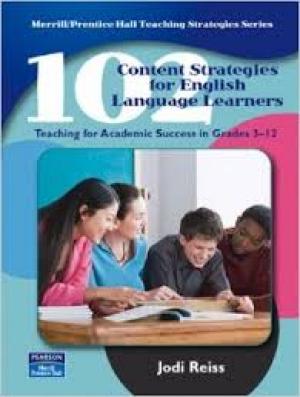
By: Jodi Reiss
Prentice Hall
(2008)

After a brief exploration of theoretical and cultural considerations when teaching content to ELLs, Jodi Reiss outlines 102 strategies that can be used in grades 3-12. Content and ELL educators alike will benefit from her approach of combining a conceptual framework with practical examples, as well as her advice on selecting core concepts when reviewing content standards.

Connecting Content and Academic Language for English Learners and Struggling Students, Grades 2-6
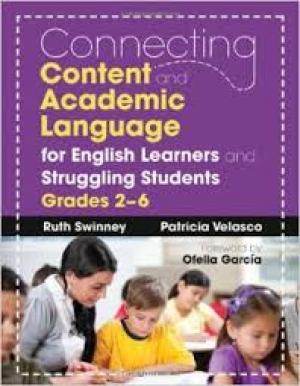
By: Ruth Swinney, Patricia Velasco

While many educators may understand why academic language is important, they may wonder how to teach it more explicitly and effectively. In this hands-on guide, experts Ruth Swinney and Patricia Velasco offer a number of strategies and approaches to help ELLs and struggling learners master the language necessary to access grade-level curriculum and to succeed in related reading, writing, and speaking tasks. Part I of the book focuses on integrateing language development into classroom lessons, and Part II offers thematic units with detailed information on how to model appropriate academic language, address student errors, and identify key vocabulary words and grammatical structures before a lesson. Helpful tools include graphic organizers, concept maps, and numerous examples from a variety of classroom settings and language instruction models.

Interactive Notebooks and English Language Learners: How to Scaffold Content for Academic Success
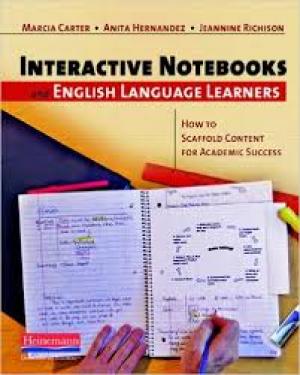
By: Marcia Carter, Anita C. Hernandez, Jeannine D. Richison
Heinemann
(2009)

Writing can be a vehicle for expanding ELLs' learning, especially if the format is an interactive notebook. The format is similar to that of a double-entry journal — students take notes or post handouts on the right-hand pages and use the left-hand pages for their own reactions to the posted material. This allows ELLs to engage and interact with content material in a way that promotes understanding and helps build academic vocabulary. Detailed instructions and examples included.

Ladybugs, Tornadoes, and Swirling Galaxies
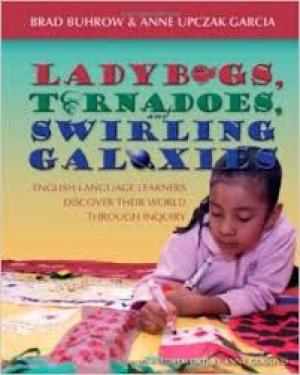
By: Brad Buhrow, Anne Garcia Upczak
Stenhouse Publishers

Brad Buhrow and Anne Garcia are primary teachers who have blended comprehension instruction and ELL best practices to explore inquiry as a literacy pathway for English language learners. The book is full of photographs of student artwork, and the authors provide explicit detail on the process they use as they move step-by-step with students from personal narrative through the independent inquiry process. Appendices in Spanish and English included.

Making Science Accessible to English Learners
By: John Carr, Rachel Lagunoff, Ursula Sexton
WestEd
(2006)

This guidebook is for science teachers, particularly in grades 4-12, who know science concepts and teaching methodologies, but may have had limited preparation for teaching English learners. This practical guide offers concrete ways to help English learners grasp science concepts, including charts, tips and other resources.

Science for English Language Learners: K-12 Classroom Strategies
By: Ann K. Fathman (Editor), David T. Crowther (Editor)

"In addition to providing a rich foundation of instructional practices (Parallels in Language and Science Teaching), the editors offer effective teaching strategies and models for lesson development including standards and assessment frames. An excellent tool for classroom teachers, teacher educators, and resource teachers working with individual students or small groups." — Curriculum Connections, School Library Journal, Fall 2006

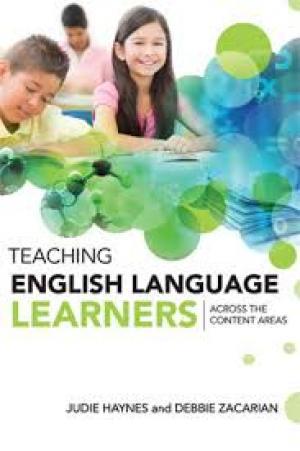
Teaching English Language Learners Across the Content Areas
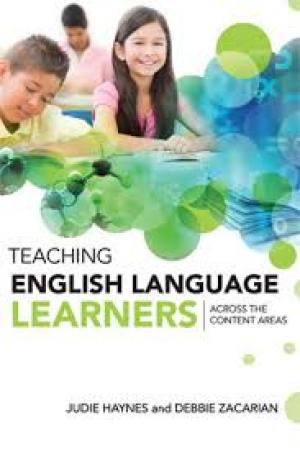
By: Judie Haynes, Debbie Zacarian
ASCD
(2010)

Judie Haynes (creator of everythingESL.net) and Dr. Debbie Zacarian offers hands-on, practical strategies that educators can implement immediately to provide effective content instruction for ELLs. Chapters focus on topics such as creating engaging lesson plans, successful small group work activities, content vocabulary instruction, and strategies focused on writing, homework, and assessment. Appendices include guided terms for composing language objectives and a lesson modification worksheet that can be used to adapt lesson plans for ELL instruction.

Teaching English Language Learners: Content and Language in Middle and Secondary Mainstream Classrooms
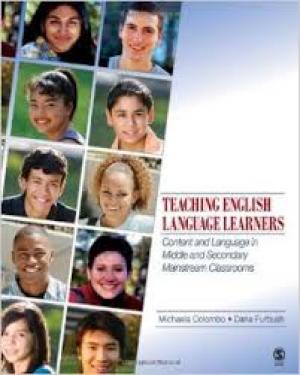
By: Michaela Wyman Colombo, Dana Furbush
Sage Publications
(2009)

This comprehensive discussion of content instruction for ELLs provides detailed information on planning and implementing effective instruction in math, science, social studies, and language arts. The authors include a thorough treatment of topics such as second language acquisition, academic literacy, and building academic language within the context of the content area classroom. The second part of the text devotes a separate chapter to each of the four content areas discussed, complete with lesson plans prepared by master teachers and mini-lessons for language development.