Teachers who work with English as a Second Language learners will find ESL/ESOL/ELL/EFL reading/writing skill-building children's books, stories, activities, ideas, strategies to help PreK-3, 4-8, and 9-12 students learn to read.
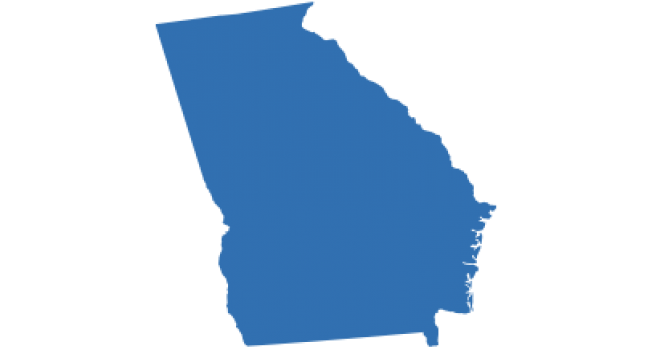
Georgia
View below:
As of the 2007-2008 school year, Georgia's schools were home to more than 72,600 English language learners (ELLs), which marks a 406% increase from the 1997-1998 school year (NCELA, 2010). The top five languages or language groups spoken by ELLs in District of Columbia are Spanish, Vietnamese, Korean, French, and Chinese (EPE, 2009).
Georgia is a member of WIDA (World-Class Instructional Design and Assessment), joining in 2005. WIDA is a consortium of states dedicated to the design and implementation of high standards and equitable educational opportunities for English language learners which offers states programming for identifying and annually assessing the English language development of its English learners.
State ELL Resources
State Agency: Georgia State Department of Education (GaDOE)
ELL Website: ESOL Resources
This website includes an annual ESOL / Title III Resource Guide that covers GaDOEs laws and regulations regarding identification, assessment, and programming.
ELL Identification
Home Language Survey: A Home Language Survey must be used for all newly enrolling students to screen who should be assessed to determine if a student is an English learner.
Placement Exam: WIDA-ACCESS Placement Test (W-APT)
ELP Standards & Assessment
ELP Standards: WIDA English Language Proficiency Standards
ELP Assessment: WIDA-ACCESS for ELLs
ELL Instruction
The GaDOE Resource Guide states the following (p 5):
While English is designated as the official language of Georgia, and the state high school graduation test is in English, our responsibility is to successfully prepare our students to access all postsecondary options available. This objective requires that our instruction approach be flexible to accommodate the needs of a very diverse student and parent population.
GaDOE includes six approved delivery models for providing language assistance to English learners and minimum required minutes per day for this programming to occur (found on pages 77-78 of the Resource Guide):
- Pull-out model outside the academic block — students are taken out of a non-academic class for the purpose of receiving small group instruction
- Push-in model within the academic block — students remain in their general education class where they receive content instruction from their content area teacher and language assistance from the ESOL teacher
- A cluster center to which students are transported for instruction — students from two or more schools are grouped in a center designed to provide intensive English assistance
- A resource center/laboratory — students receive language assistance in a group setting supplemented by multi-media materials.
- A scheduled class period — students at the middle and high school levels receive language assistance and/or content instruction in a class composed of English learners only.
- An alternative approved in advance by the Department of Education through a process describe in Guidance accompanying this rule.
GaDOE provides minimum time standards accordingly (found on page 77 of the Resource Guide):
Grades K-3
225 minutes a week; per day = 45 minute segments
Grades 4-8
250 minutes a week; per day = 50 minute segments
Grades 9-12
275 minutes a week; per day = 55 minute segments
Statewide Standards-Based Assessment
Assessment: Criterion-Referenced Competency Tests (CRCT)
ELL Accommodations: GA Accommodations Manual
Additional Information
Title III Information
WIDA: Georgia Contact Information
Common Core State Standards: Yes
Georgia Association of Educators
Georgia Association of Educators is a National Education Association State Affiliate that regularly lobbies legislators for the resources schools need, campaigns for higher professional standards for the teaching profession, and files legal actions to protect academic freedom and the rights of school employees.
Georgia State Parent Information Resource Centers
Georgia State PIRC's goal is to address barriers and weaknesses in communities such as poverty and illiteracy and to encourage families to realize the benefits of parental involvement and take advantage of services available that lead to the academic success of children.
Georgia TESOL, a registered non-profit organization, has been advocating for language learners and educators in Georgia since the early 1980s.
References
Editorial Projects in Education (EPE). "Most Common Non-English Languages Spoken by ELL Youths, by State." Perspectives on a Population: English-Language Learners in American Schools (Education Week's Quality Counts 2009 Report). Pg. 13. Retrieved from http://www.edweek.org/ew/toc/2009/01/08/index.html. January 2009.
Office of English Language Acquisition, Language Enhancement, and Academic Achievement for Limited English Proficient Students. Georgia Rate of EL Growth (1997/98-2007/08). Compiled July 2010 and retrieved from http://www.ncela.gwu.edu/t3sis/state/georgia/data.
Search Colorín Colorado
As our ENL team is planning a parent night we love the Reading Tip Sheets! We
were so excited to see that they are available in 11 languages. Thank you!
~ Franklin Township ENL Team