

The fourth key topic of this guide focuses on multilingual learners' participation in school activities, access to the core curriculum, and enrichment opportunities.
A Note on Terminology
The strengths-based term multilingual learner is used throughout this document to recognize and value students' existing language abilities and highlight what they know. Keep in mind that states may use different terms and that many federal documents use the terms "English learner" and "Limited English Proficient students."
See the federal definition of a multilingual learner in Who Are Multilingual Learners?
Guiding Questions
- What action steps should be taken to ensure MLs meaningfully participate in curricular and extracurricular activities?
School Activities, Curriculum, and Enrichment Programs
Under Title VI of the Civil Rights Act of 1964 (Title VI) and the Equal Educational Opportunities Act of 1974 (EEOA), public schools must ensure that EL students can participate meaningfully and equally in educational programs (U.S. Department of Justice, Civil Rights Division and U.S. Department of Education, n.d.-a).
All public and public charter schools and districts must take time to:
- Meaningfully inform students and families about these opportunities to ensure that all MLs and their families have equal access to the same activities as do English-fluent peers and their families
- Assist MLs and their families with activity enrollment
- Support MLs and their families in the process of enrolling in these activities
- Address barriers to MLs and their families' involvement
It is useful to think of before-, after-, and out-of-school events, programs, and other school activities as cultural activities. Each involves routines and practices that are familiar to American English-fluent speaking families, students, and others. They know the actions to take as they are deeply familiar with the predictable routines, practices, and outcomes associated with them. Examples of cultural events include parent conferences, open house or curriculum events, potluck suppers, athletic events, and field trips.
It is essential for educators to think carefully, empathetically, and proactively about the ways in which MLs' families can become familiar with these and actively participate in them. A helpful means for creating partnerships that promotes families' active participation in supporting student engagement in all school and community activities involves the framework below. For additional resources, see English Learner Toolkit: Chapter 4.
Advanced Coursework
In addition, it is important for schools and districts to ensure that MLs have access to advanced and specialized coursework, such as:
- Advanced Placement (AP)
- Gifted and talented education
- Honors
- International Baccalaureate (IB)
- Career and technical education
- Pre-collegiate experiences
- Career pathways
- Dual enrollment
- Dual credit
- Concurrent enrollment programs
See more in the federal fact sheet, Ensuring Meaningful Participation in Advanced Coursework and Specialized Programs for Students Who Are English Learners.
Case Study: Permission Slips |
|---|
Alfredo is a middle school ML who wants to play 'after-school' soccer. At the end of the school day, he excitedly jogs to the soccer field to join his classmates. The first activity that the soccer coach does is collect permission slips. When the coach asks Alfredo for his permission slip, Alfredo shrugs his shoulders to signal that he doesn’t know what the document is. In response, the coach says, "I am sorry, but you cannot play without it." Alfredo saunters off the field feeling very confused about what he did or did not do (as he is not sure) and sad that he cannot play the game that he loves. Discussion Questions
|
Tools for Educators
These tools can support educators in their work related to MLs' participation in school activities. A PDF version of the questions below is available.
Action Steps: Meaningful Participation in Activities |
|---|
Every local education agency (i.e., school and district) should review state agency obligations related to student participation in school activities. The following list of action steps, drawn from Zacarian (2023, p. 190), is intended to guide schools and districts as they ensure that MLs have equal opportunities to meaningfully participate in the same curricular and extracurricular activities (before, during, and after school) and local activities as their English-fluent peers, both in and out of school.
|
Copyright© 2023 by Corwin. All rights reserved. Adapted from Transforming Schools for Multilingual Learners: A Comprehensive Guide for Educators, Second Edition by Debbie Zacarian. Thousand Oaks, CA: Corwin, www.corwin.com. Posted with permission from Corwin Press.
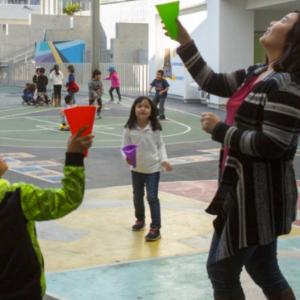
Videos: The Importance of Extracurricular Activities for ELLs and Immigrant Students
Teachers of MLs, including a former ML himself, talk about the importance of extracurricular activities for MLs and immigrant kids.






Add new comment