

Fluency is the ability to read a text accurately and quickly. Fluency is important because it provides a bridge between word recognition and comprehension.
It can be a tricky area when it comes to ELL reading instruction. For native English speakers, fluency and reading comprehension generally share a strong correlation. When fluent readers read words accurately, they often recognize them and comprehend them at the same time, especially if they are reading aloud. This is not always the case for ELLs.
What You Need to Know
Many ELLs can be deceptively fast and accurate in their reading because they are good readers in their primary language and have strong decoding skills. Yet they may demonstrate little understanding of the text, and hearing the text out loud may not necessarily provide a step towards comprehension as it is likely to do for native speakers. One important factor in the connection between fluency and comprehension is ELLs' oral language skills, which Dr. Coleen Carlson describes as "an important foundation that supports the role of fluency as a bridge to comprehension" (p. 93).
Inaccurate indicator of ELLs' comprehension
It is not unusual for an ELL student to read a passage beautifully and then not be able answer more than a couple of comprehension questions correctly. Decoding skills (sounding out words) and comprehending the text are two different skills.
Limited benefit from hearing texts read aloud
Native speakers who are not strong decoders can often comprehend text that is read to them better than text that they read themselves. That's because when someone else is doing the reading, they can focus on meaning without having to struggle to get the words off the page. They also are more likely to be familiar with the language and vocabulary in the text.
With ELLs, however, comprehension problems tend to be associated with limited vocabulary and limited background knowledge. Thus, listening to text read by someone else won't enhance comprehension.
Strategies for ELLs
Balance fluency and comprehension.
- Look for ways to integrate fluency practice into activities that focus on foundational skills, language development, vocabulary, and comprehension. For an example of what this looks like, see the featured videos below from our sister project, Reading Universe.
- For ELLs, be wary of fluency interventions that focus primarily on developing students' reading rates at the expense of reading with expression, meaning, and comprehension (e.g., pulling an ELL out of a language development block to practice timed readings). Supporting students' language development and comprehension is a key step in supporting students' overall fluency.
- Keep in mind that students may read fast, but with insufficient comprehension. Fluency without comprehension will require instructional intervention in vocabulary and comprehension skills.
Give students a chance to practice reading out loud.
- In order to improve fluency in English, provide independent level texts that students can practice again and again, or read a short passage and then have the student immediately read it back to you.
- Have the student practice reading a passage with a certain emotion or to emphasize expression, intonation, and inflection based on punctuation.
- Also, keep in mind that ELLs may be uncomfortable reading aloud during class and this activity may work best 1:1 or in a small group with a teacher.
- Keep in mind that "round robin" exercises are not often not effective for ELLs. Learn more in 5 Reasons Not to Use Round Robin Reading with ELLs.
Recommended Resources
Literacy Foundations for English Learners
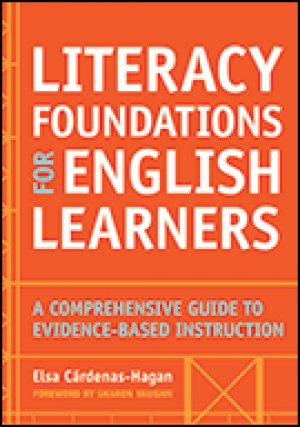 This accessible book will give teachers the knowledge base they need to help English learners develop strong literacy skills and achieve academic success. Aligned with IDA's Knowledge and Practice Standards, this book prepares current and future educators to teach English learners the key components of language and literacy, as first described in the National Literacy Panel report.
For each component, teachers will get a dedicated chapter with research-based insights on how to teach English learners, guidance on making connections across languages when teaching that component, and ready-to-use principles and strategies for instruction. Learning objectives, study questions, and extended application activities help educators grow their knowledge and apply it in their classrooms.
An in-depth video book study highlighting Literacy Foundations for English Learners is also publicly available on YouTube. Chapter 6 focuses on fluency instruction for ELLs.








Add new comment