
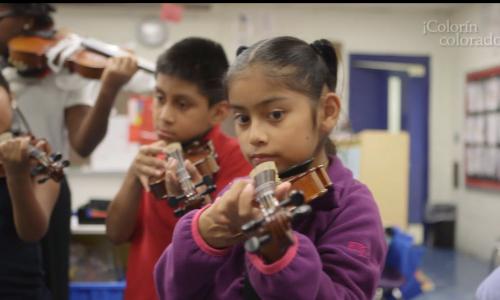
School activities, clubs, and special classes can be an important opportunity for English language learners (ELLs) to make friends, participate in the school community, learn new skills, and pursue their interests. They also provide a change of pace from the taxing work that ELLs do during the school day as they are learning a new language.
School staff who lead these classes and activities can play a critical role in:
- Letting students know about these opportunities
- Encouraging student involvement in activities
- Ensuring students are able to fully participate in activities
- Welcoming families to school events
These opportunities can also open new doors for students. Principal Mark Gaither notes,
This is about exposure to opportunity and expanding the horizons for our kids. These are life-changing moments, when a child finds a love and an aptitude, and they all of a sudden see broader possibilities of what their life could be like.
This article includes general suggestions, as well as specific tips for:
- Art teachers
- Music teachers
- Physical education teachers
- Athletic coaches
- School club coaches
For additional information on ensuring that ELLs have adequate opportunities to participate in school activities, see the following:
Getting Started
Creating a Welcoming School Environment
All staff members are important members of the school community, and every adult in a school has the opportunity to make a positive difference for a student. When former ELLs recall their school memories, they often recall moments of kindness from individual staff members or teachers.
For example, consider this conversation shared by Jan Anglade, an ESOL teacher in Georgia:
Me: "So you like this school and the teachers?"
Student: "Yes, I like it. You are my favorite teacher."
Me: "But I'm NOT your teacher. You have never been in my class."
Student: "Yes, but you are nice to us, and smile, and talk to us, and say good morning to us."
Here are some tips to help students feel welcome:
- Greet students with warm smiles.
- Introduce yourself with the name that students should use.
- As you get to know students, learn to say their names correctly.
- Say hello to them when you see them.
- Show respect for students' cultures.
- Look for opportunities to involve students and ask for their help with special jobs or tasks.
- Intervene immediately if students are being bullied. Keep an eye out for bullying due to language, accent, country of origin, cultural customs, food, dress, or immigration status.
Hands-on Learning
- Engage students with the use of visuals, step-by-step instructions, project-based learning, and translations if necessary.
- Teach key vocabulary words that students need to participate in the activity.
- Use books written for children, middle grades, and young adults that highlight special activities. You can find titles by topic in our Colorín Colorado’s Book Finder, as well as in the booklists below.
- Look for ways to make connections with students' interests, school clubs, and community events.
- Keep in mind that students may already have skills in your activity — even if they are not yet communicating in English.
Helping Multilingual Families Communicate
Schools should have clear guidelines about how to communicate with multilingual families and available language resources, such as interpreters, language lines or apps.
In addition:
- Treat families with respect and patience.
- Keep in mind that information related to registration, practices, schedules, school events, and fundraising may be new to families. Look for ways to give families the information they need.
Translation apps
Translation apps can fill in gaps where needed. Your school may already be using an app like this with families, and if so, it can be a helpful resource for school staff.
Translation apps are best for quick questions, reminders, and straightforward issues. They are not appropriate for sensitive communication — and they are not perfect. They also can't take cultural considerations into account the way that bilingual, bicultural staff members can.
Serving Immigrant Students
All students have a right to a free public K-12 education, regardless of their (or their parents') immigration status. Students should never be asked about their immigration status by school staff.
Collaborating with Colleagues
Your colleagues can be valuable partners in your work supporting ELLs. This includes:
- Other team members in your role
- Other staff members throughout the school
- Colleagues who work closely with ELLs and ELL families, such as family liaisons, bilingual teachers, and ESL specialists
If you have questions or issues that need to be addressed, reach out to colleagues who can brainstorm ideas together. Everyone's role and perspective is valuable!
Note: If you are bilingual, talk with a supervisor about establishing guidelines for communication with families so that you are are not frequently being pulled from other duties to translate.
Requesting Training
If you have additional questions that need to be addressed, consider asking for additional training with staff members or administrators who can help answer your questions.
Art Teachers
- Invite students to share art from their cultures, as well as their artistic interests.
- Give students clear step-by-step instructions for student assignments. Support understanding with examples, written directions, visuals, or translation.
- Display student artwork in hallways, student art shows, and public events.
- Teach key vocabulary (primary), and use sentence frames to model phrases students need to use: "__ is a __ color." (Red is a primary color.)
- Bring art to life beyond the classroom, by taking field trips, bringing in guest speakers, sharing online museum exhibits, or doing art projects in the school or outside.
Music Teachers
- Invite students to share music and dance from their cultures, as well as their musical interests.
- Teach key vocabulary (brass), and use sentence frames to model key phrases: "A __ is a __ instrument." (A trumpet is a brass instrument.)
- Find out if students have experience with music lessons or musical groups outside of school, such as a band or a choir.
- Ensure that students are aware of school musical groups; that they have access to instruments; and that families know about performances.
- Bring music to life beyond the classroom by taking field trips, bringing in guest speakers, sharing online performances, and attending local performances.
Physical Education
- Explain how P.E. classes work and what clothes students will need for P.E. If there are cultural considerations involved, talk with an administrator and family liaison about how to proceed with sensitivity.
- Get to know your students' interests and favorite sports. Some of your students may be big sports fans or have experience playing on a team.
- Some students may hesitate to join a new activity. Help students understand how to play new games, pair them with a friendly buddy, and offer encouragement.
- Teach students important words they need to know, such as defense, and words that have multiple meanings, such as run.
- Bring sports and healthy activities to life through field trips, by bringing in guest speakers, and events such as community walks or runs.
Athletic Coaches
- Find out if students already play your sport and invite them to share their skills if so.
- Let students know about different school sports teams; how to sign up; how practice schedules work; and how to access equipment.
- Give students permission slips if needed, ideally in families' languages.
- Make sure families know about upcoming games and how fundraisers work if your team will be fundraising.
- Ensure that students understand game rules and team rules and that team members treat each other with respect.
- Keep an eye out for bullying and address any bullying that happens immediately.
- Bring sports to life beyond the classroom, whether in the community, on field trips, or by bringing in guest speakers.
School Club Coaches
- Ask students if they have tried your club activity before.
- Help students understand the rules and expectations of your activity, especially if it is new to them. Use visuals and step-by-step instructions.
- Take time during your club meetings to get to know students and their interests. This interaction can be very meaningful for students.
- Share student work with peers and families in displays, activity fairs, and community events, such as tournaments.
- Bring your activity to life by taking field trips, bringing in guest speakers, and connecting with other school clubs.
Related Resources
Articles and News Headlines
- Bringing art into classrooms can benefit students who are learning to speak English (The Conversation)
- How mariachi programs keep students like me culturally connected in college (EdSource)
- Music brings learning and hope to Bronx school with dozens of new migrant students (Chalkbeat New York)
- ‘Going Varsity in Mariachi’ documentary spotlights competitive high school competitions (PBS News Hour)
- The Idea Was To Keep Kids Safe After School. Now They're Chess Champions (NPR)
- New Freedom Park and the Immigrant Families Who Designed It (Colorín Colorado)
Booklists
Books for Children
- Art, Music, and Dance: Books for Young Children
- Baseball: A Game for All Americans
- Time for Soccer!
- Lucha Libre: Stories of Adventure and Mystery
- First Concepts in Mexican Folk Arts
- Art and Artists: American Indian Heritage
- Art and Artists: Hispanic Heritage
- Art, Music, and Dance: Books for Young Children
- Art, Music, Dance, and Drama: Asian Pacific American Heritage
- Dance and Dancers: Hispanic Heritage
- Music and Dance: American Indian Heritage
- Music and Musicians: Hispanic Heritage
- Music for Kids: Hispanic Heritage
- Powwow Stories: Books for Kids




Add new comment