
The Colorín Colorado ELL Strategy Library is an award-winning resource that includes more than 35 research-based classroom strategies. Educators are excited to discover and share the ELL Strategy Library in professional learning, coaching, co-teaching, teacher training, and more! Here's how you can use it.
Getting Familiar with the Strategy Library
You can browse, search, and filter strategies to see what's available. Some ideas include the following:
- Familiarize yourself with a new strategy every day.
- Dig into a topic you've been wanting to learn more about, such as writing, vocabulary, or peer learning.
- Identify (and bookmark) strategies you can share with colleagues during upcoming training sessions.
- Share the library with your colleagues in newsletters, emails, and meetings.
- Take a look at the introductory video below and share it with colleagues.
- Present the free slide deck we have prepared, which features several activities for professional learning in a facilitator's guide.
Video: The ELL Strategy Library
Learn more about the ELL Strategy Library from Colorín Colorado.
Activity Ideas
ELL Strategy Library: Exploration
- Share the ELL Strategy Library link or QR code.
- Give participants at least 10-15 minutes to explore the library, with additional time for discussion.
- There is also a related Strategy Library graphic organizer you can use for this activity in the facilitator’s guide.
- You can also repeat this activity, asking participants to select a new strategy from a different page or one that has a different focus.
- Ask people to share their findings and ideas with the larger group.
Discussion questions
- What strategy are you excited to take back to your setting and why?
- How can you use this strategy in your instruction or collaboration?
- What is an example of how you might use this strategy in content instruction?
Professional Learning Resources: Exploration
- Show participants how to navigate to our professional learning resources. (Go to Resource Library > ELL Resource Collections > ELL Professional Learning Sessions.)
- Give participants at least 10 minutes to explore our strategy slide decks.
- The Strategy Library graphic organizer also includes this activity.
- You can repeat this activity, asking participants to select a new strategy from a different page or one that has a different focus.
- Ask people to share their findings and ideas with the larger group.
Discussion questions
- Which slide deck are you excited to take back to your setting and why?
- How can you use this slide deck in your instruction or collaboration?
- What is an example of how you might use this slide deck in content instruction?
Strategy Focus
Another option is to take a deep dive on a particular strategy. You may wish to choose a strategy ahead of time, or you can poll participants about the strategies they’d like to learn more about.
A deep dive could include sharing an overview of the strategy, asking participants to read through the strategy, and then inviting participants to share their:
- Observations
- Questions
- Ideas for how and where to use the strategy
To take it a step further, you could then try a strategy brainstorm activity, described below.
For example, let’s say that your attendees have questions about reading grade-level text with ELLs (or they are getting those questions from colleagues). You might focus on Text Engineering, which includes a related slide deck, activity, and graphic organizer.
After reading the strategy and discussing ideas for application, you might ask participants to think of a situation where this strategy would be relevant, try their own text engineering exercise, and plan how to introduce and practice this strategy with students.
Discussion questions
- What is an "a-ha" moment you had after learning about this strategy?
- How can you use this strategy in your instruction or collaboration?
- What is an example of how you might use this strategy in content instruction?
Strategy BINGO!
You can also play ELL Strategy BINGO! This will likely work best in a group of people who are meeting in person and can move around the room.
Discussion questions
- What did you learn from this activity?
- How could you use it in your setting?
- Did you think of any other categories that weren't listed?
Strategy Brainstorm
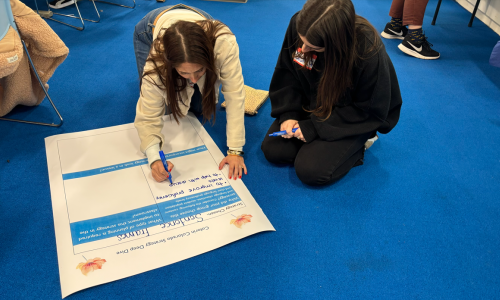
You may also wish to try an activity where participants get practice looking for strategies around certain topics. This is good experience to prepare for co-teaching situations where teachers may be working on a wide range of topics, sometimes with little advanced notice.
Here's how it could work.
- Share a sample topic, or two sample topics for different ages (one for elementary and one for secondary).
- Ask participants to work with partners to choose a couple of strategies that they could use to support that topic. (You can also ask them to write their answers in a shared document so you have a record of the brainstorm.)
- Then ask the pairs to share their ideas with the larger group so that people will hear a range of ideas on the same topics.
- You could then repeat the activity and ask participants to choose a topic they have recently co-taught or have coming up.
- You can also use the related graphic organizer from the facilitator's guide for this activity.
Discussion questions
- What ideas did you come up with?
- How did different people approach the same task?
- Did anything surprise you in this activity?
Sample Topic: Community Helpers (Elementary)
During this exercise, a group of elementary teachers came up with the following strategies that could be used to teach about community helpers.
- Picture Retell
- Realia and Manipulatives
- Using Multimedia Resources
- Images (Photos, Illustrations and More)
- Sentence Expansion
- Match, Sort, Order
- Student-Generated Questions
- Picture Word Inductive Model
One group wrote, "Using the Picture Word Inductive Model, we might label a community helper scene with nouns first (name, equipment, places). Then we would add sentences describing what they are doing/what is happening. We would also color code nouns and verbs. Image can be used as a reference. Students could use content words and sentences to share information with a partner using the annotated image; they can rehearse orally and write too."
Sample Topic: Invasive Species
In the same session, a group of secondary teachers came up with the following strategies that could be used to teach about invasive species.
- Using Multimedia Resources
- Student-Generated Questions
- Sentence Starters/Frames
- Collaborative Reading Protocol
- Sentence Deconstruction
- Text Engineering
- Cognates
- Annotated Diagrams
Their ideas included:
- Show images of the zebra mussel.
- Working in pairs, students chunk and summarize text.
- Use images with labels to reinforce cognates and make connections to prior knowledge and teach background knowledge/concepts.
- Identify words with multiple meanings ('lantern' vs 'lantern fly').
- Ecology: Explain the ecological consequences when foreign species are introduced into a system by using a "before" and "after" photo. What do you see and notice? What do you think happened? Use claims, evidence, and reasoning strategy.
- Take a stance! Determine if introducing an invasive species is "good" or "bad"? What are benefits/consequences? Use "turn and talk" and use evidence to support reasoning.
Planning a PD Session
Using the related template, brainstorm ideas for a PD session featuring the ELL Strategy Library, answering questions such as:
- Who are the attendees?
- What are the goals of the session?
- Which activities would you use?
Discussion Questions
- Think of a student you teach. How could you use the ELL Strategy Library to support that student?
- Think of a colleague. How could you use these resources in your collaboration?
- Think of a lesson you taught recently. How could you have used the ELL Strategy Library?
Strategy Modeling
For further extension, you may wish to have participants use and model the strategy as part of the activity. For example, you can model the Collaborative Reading Protocol as partners read through one of the selected strategies together. As a team, they decide which of the 2 strategies (or a 3rd selection), they would like to read together. Once they select their strategy, have them follow these steps:
- Partner A reads the first chunk of text or first section of the strategy.
- Partner B starts a discussion about that section by asking a question, making a connection, or summarizing the information.
- Partner A adds ideas to the discussion.
- Partner B reads the second section aloud.
- Partner A continues the discussion about that section by asking a question, making a connection, or summarizing the information.
After they read and discuss that one strategy together, have them go to the Collaborative Reading Protocol strategy and quickly review the steps they just experienced with their partner. Debrief how the protocol worked for them and what other modifications they would make to the Collaborative Reading Protocol.
Talking About Scaffolds and ELLs
Sometimes, our colleagues are hesitant to use scaffolds for a lot of reasons. Take a look at this video from National Teacher of the Year, Missy Testerman, along with this quote from ELL strategy authors Beth Skelton and Tan Huynh:
Some teachers express concern that (these strategies) give experienced multilinguals an "unfair advantage"...
In response, we share that even highly experienced and skilled mountain climbers use scaffolds such as ropes and harnesses. Their tools do not shrink the height of the mountain. They just make climbing the mountain possible. (p. 62)
Source: Adapted from Long-Term Success for Experienced Multilinguals by Tan Huynh and Beth Skelton. 2023. Corwin Press.
Discussion questions
- What resonates with you from this discussion?
- How open are your colleagues to using scaffolds?
- How might you approach the use of scaffolds differently with colleagues?
Planning Professional Development
Colorín Colorado has prepared several free slide decks that can be used for turnkey professional development sessions.
1. ELL Strategy Slide Decks
Our ELL Strategy Slide Decks feature several of our strategies from the ELL Strategy Library.
2. ELL Strategy Library Overview
This slide deck offers an introduction to the ELL Strategy Library and features several activities for professional learning.
To get started, you need:
- ELL Strategy Library Overview Slide Deck: Includes activities, discussion questions, and speaker's notes (also featured below)
- ELL Strategy Library Overview: Presenter's Guide: Includes tips for planning your session and handouts






Add new comment