
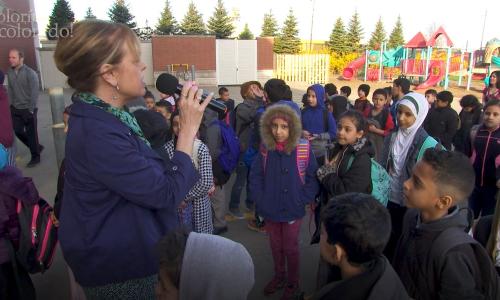
At Salina Elementary School in Dearborn, MI, more than 90% of the students are English language learners (ELLs). Many of the students are from the war-torn country of Yemen and have experienced displacement, family separation, and the impacts of violent conflict.
The school leadership and staff have worked hard to ensure that students have lots of opportunities to learn through play both in and out of the classroom. In this interview, Principal Susan Stanley talks about why play is important and how the staff keeps play front and center of their planning and instruction.
To learn more about Salina, see the following articles from Colorín Colorado, as well as our award-winning film and interview from the school below.
- Supporting ELL Success with STEAM and Hands-On Learning
- "Mental health comes first": A Principal Shares Her Priorities for This Year
Q&A with Principal Sue Stanley
Many of your initiatives prioritize play for your students. Why is play so important?
Play is natural for children for many reasons. Young children learn about themselves, their environment, and others through play. This is how they make sense of the world around them and how their brains develop. When you watch children play and notice what they are doing, they are mimicking, reenacting, and reinforcing skills. Their brains are forming and making connections through play. Language, problem-solving, confidence, and awareness of themselves are all part of what children learn by playing.
Why is play important for ELLs?
Ensuring time for play is essential for our ELLs and newcomers. While a child plays, language is enhanced naturally in an environment all children can relate to. Interacting with others or even talking to themselves as they reenact something to help it make sense are all examples of how language is built and codified through play.
How do you support play within the school day?
As the building leader, I support and help lead discussion on this topic. In today's "test-rich" educational environment, I often have to remind teachers to take a breath and make time for play. As an early childhood staff, they understand the importance of play but can sometimes get bogged down with all the requirements. I remind them that important learning is occurring during play and our responsibility as educators is to educate the whole child. This can only be accomplished by supporting the natural learning process that is achieved through play.
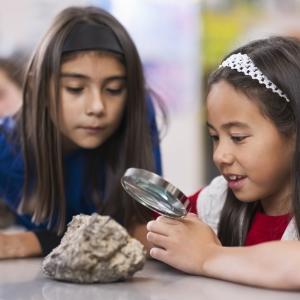
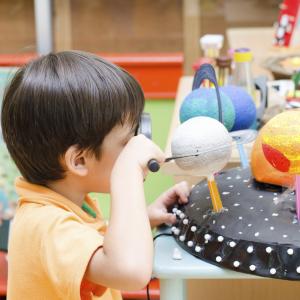
We also focus on hands-on learning and project-based learning through activities such as Maker Space, robotics, LEGO® projects, and LEGO® League project.
How does play help with socializing and why does this matter?
We are still dealing with the long-term effects of the pandemic in our schools today. Our children were most affected by the isolation which occurred Many of our students were young children during the pandemic and didn't have the opportunity to interact with others outside of their immediate family, which is critical for their development. Often communication was one-way through watching videos, tv, etc. We have noticed a huge increase in speech and language needs, as well as social emotional challenges with our young students.
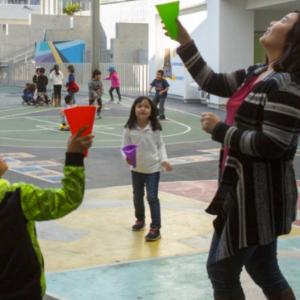
Also, we sometimes need to help students with the social skills they need during play. After schools reopened in the pandemic, we saw problematic behavior such as fighting and difficulty getting along during unstructured play and at recess. We noticed many signs of anxiety. About every other day, we would meet as a leadership team (social worker, lead teachers, physical education teacher, and myself) to tweak recess. We had volunteers and any available staff out on the playground playing games and interacting with kids. We kept our ears and eyes close to the ground to look for any and all opportunities to be there for them and that focused attention and support made a big difference.
This year during summer school, we had a game room set up. Children came into the room and were explicitly taught the strategies and the language of the game they were playing that day. They were so focused. For thirty minutes, children strategized, supported each other, and learned so many academic skills related to communicating and working together. Students who were normally seen as having challenges "sitting" through a 30-minute lesson had no problem concentrating.
How are you supporting play outside and nature-based play? Why are these an important addition to what's happening inside?
As teams, we look at how the objectives we teach can be taught through play. How can we take that learning away from the desks? What alternate ways can we meet the objectives through hands-on, collaborative activities that get children outside of the classroom in a less structured environment? Teachers understand that games are engaging to children.
While our data is still coming in, the observational data we can surely cite is that our children are more grounded, are able to focus and interact with others in a more positive way then when they came to us. There is research supporting the benefits of play, especially play in a natural environment. This is just one example of an article I have shared with teachers as a gentle reminder of the value of getting our students outside.
In addition, we have a school garden, and even though the students are hard at work when they are taking care of the garden, in some respects, they are playing during that time as well.
What advice would you give to other schools who have cut down play time or think they don't have enough time for play?
We all want the same thing for our children. Every educator, every leader, every community wants to see our children to achieve. We want our children to be confident, enthusiastic learners so they will see learning as a lifelong endeavor. With so many things schools have to juggle, it seems overwhelming to fit everything in. We shouldn't think of play as something that we need to "fit in" but rather the pathway — the "how to" achieve the learning. When I think of the students that are disengaged, unable to attend, discouraged and ultimately become turned off to school, how can we ignore that?
What other partners are you working with to support these initiatives?
As a district, we have an Early Learning Coalition which helps keep this discussion at the forefront. We have also partnered with the City of Dearborn to create a Green Schoolyard where children can play outside in a natural environment. Other partners include the following:
Early childhood perspective
Early childhood director Hallye Smith shares the following thoughts about play for young children, as well as the impact of play on fine and gross motor skills. This quote has been edited for length and clarity.
"Play is how children learn. That's how they navigate their feelings and how they learn how the world works. Hands-on is so important. When they are in our center, they're working with LEGOs®, which are great for motor skills because you have to pull things off and put them back on. We're doing Play-Doh®; we're using putty; we're gripping stamps.
"We also feel it's really important for children to be outside. There are skills you need outside: riding a tricycle or climbing on a playground. Gripping something and pulling yourself up helps fine motor and gross motor skills. We also have a garden where students learn how to use tools like a shovel, take care of plants, and grow foods they can eventually eat for snacks.
"This is all really important because as kids use more screens, we notice their hands aren't as strong. It's harder for them to hold a pencil and hold something really small. So play is a way we help them build these important developmental skills."
Related Resources
- Integrating Loose Parts Play Into Recess (Edutopia)
- Play and Recess: Resource Collection (Edutopia)
- The Benefits of Play for All Ages (KQED)
Related Videos
You Are Welcome Here (#DearbornWelcome) is an award-winning 20-minute film from Colorín Colorado highlighting how the Dearborn, MI public school district is helping its immigrant students succeed. The film features Salina Elementary School and Salina Intermediate School in the South End of Dearborn which serve large populations of families from Yemen.



Add new comment