
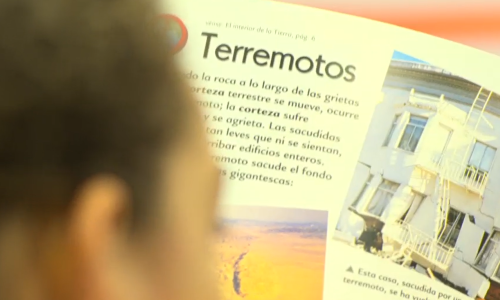
When working with English language learners (ELLs), students' primary languages are a powerful tool that educators can use — even if they don’t speak those languages or are working in a classroom with students who speak many languages.
This why Dr. Fred Genesee calls multilingual students' primary languages their "most valuable resource." Students are drawing upon their home languages even when that language isn't part of instruction. There are many ways to make connections to students' home languages in classroom literacy instruction and tap into those languages as a resource in the classroom.
For ideas related to content-area instruction, see 10 Tips for Using Students' Home Languages to Support Instruction.
Learning About Students' Primary Languages
A key first step is to let students know that their languages are valued and respected. Next, it's important to learn more about your students' languages. Here's how to begin.
Identify students' home languages.
This information may be available on home language surveys and through student records. You may also be able to find this information from talking with ESL/bilingual colleagues, families, and students themselves. Keep in mind that students may speak multiple languages and that some students may be hesitant to share information about their home languages, as in the case of Indigenous families from Latin America who may speak some Spanish but prefer not to disclose their Indigenous identity.
Learn a little bit about students' languages.
Learning a little bit about your students' languages can go a long way. At the basic level, you can learn a few phrases, such as a greeting and "thank you." However, it's also beneficial to understand how the language may be similar or different from English. What patterns might be typical? What sounds might be difficult to pronounce?
Determine if any of your colleagues speak students' languages.
Staff who speak students' languages, such as bilingual teachers, family liaisons, interpreters, or other professionals, can be an important resource and may be able to provide important insights. Confirm whether they feel comfortable being approached in that role and clarify the best way to approach them with questions.
Video: What I Remember About Being an English Learner
Areli Schermerhorn is an ELL expert in Syracuse, NY. In this interview, she remembers coming to Seneca County, New York from Puerto Rico and her experiences as an English learner.
Video: Support for Students Who Speak Mixtec
Principal Mark Gaither and special education teacher Katrina Kickbush share the experience of realizing that a significant population of their Mexican families spoke Mixtec, not Spanish.
Making Connections to Students' Languages
Now you are ready to start making some connections! This is a critical step in ELLs' literacy development. However, it is likely to be overlooked in general literacy curriculum materials or approaches.
Learn about the research connection.
In his Colorín Colorado article about the value of students’ home language, Dr. Fred Genesee writes:
Extensive research, again from around the world, has found that children who are learning to read in a second language are able to transfer many skills and knowledge from their first language to facilitate their acquisition of reading skills in the second language. The best evidence of this comes from studies showing that students with strong reading skills in the home language also have strong reading skills in their second language. Much of this work has been done on ELLs in the U.S. (August & Shanahan, 2006; Riches & Genesee, 2006).
It is important to keep in mind that the extent to which a student's literacy skills from their first language transfer depends on many factors, such as how similar the alphabetic systems between the two languages are and whether they share any connection in their origins, such as two languages that both derive from Latin (Nieser & Cárdenas-Hagan, 2020, p. 65). The students' levels of literacy in their home language will also have an impact on their literacy development in their new language. Learning more about the languages students speak can help educators target instruction, notice patterns among speakers of the same language, and help students understand the relationship between their language and English
Learn what you can about students' prior literacy instruction.
Students' educational experiences may vary widely. Some students may have attended school regularly; other students may have interrupted or limited schooling, particularly if they have been displaced from their home.
Find out what you can about students' prior literacy instruction. For students who have literacy skills, these are an important resource to tap into. However, even for students with little formal literacy experience, their language can still be pulled in as a resource. Drs. August and Shanahan write, "Oral proficiency and literacy in the first language can be used to facilitate literacy development in English" (2006, p. 5).
Some questions to ask include the following:
- Can students read in their home language?
- Do students have any early literacy skills in their primary language, including knowing the alphabet, letter names, or letter sounds? If so, this knowledge is a resource teachers can tap into.
For example, if a student has learned to read in their primary language, they can apply the skill of matching a symbol with a sound in a new language. Students who have not learned to read in their primary language may have difficulty putting together new letters, new sounds, and new vocabulary words all at once.
Look for bridges between languages.
- Ask students how their language is the same or different than English in terms of how the language is written, the sounds that letters or symbols make, and words that might be related.
- Help students become familiar with sounds, letters, and symbols that are shared between languages, as well as those that are not shared between the languages. (Some examples across different languages are included in Literacy Foundations for English Learners.)
- Ask students if they have words that begin with a particular sound, or if there are any words related to a particular word in English. This can work with students who have limited literacy skills in their first language too.
- For students with native language literacy skills, help them understand that the process of sounding out words is the same across languages. (Even if students don’t have literacy skills in their first language, you may be able to point to the sounds letters make that are familiar.)
- Explain that some letters may make the same or similar sounds in both languages. Knowing this can help Spanish-dominant students, for example, as they learn to decode words in English. For example, one similarity between Spanish and English is that both languages have the /m/ sound. One difference is that in Spanish, the /h/ sound is spelled with ‘j’, ‘ge’, or ‘gi’. Dr. Claude Goldenberg goes into detail in the article Helping English Learners with Letter Sounds.
Point out differences between languages.
- If there are sounds that don’t exist in the students’ language, students will benefit from explicit instruction and practice on how to make those sounds. For instance, the letter ‘i’ exists in Spanish, but the English short ‘i’ sound (like in the word big) does not, so students will need extra practice with this sound.
- Become familiar with rules or patterns that may impact pronunciation and spelling. For example, there is no "silent e" at the end of the words in Spanish. You can learn more about how to teach this feature from this strategy.
- If a student’s primary language is not alphabetic, the student will need additional practice in letter formation and learning sound-letter correspondence.
Use cognates.
Cognates are another important tool that can help students make connections between their language and English in order to identify similarities and differences. For example, English and Spanish share many cognates, especially of academic words.
Students' Literacy Levels
Here are some additional things to consider as you get to know more about students' prior literacy skills.
| What You Need to Know | Home Language Connection | Teaching Tips | |
|---|---|---|---|
Students Have Literacy Skills in English and Their Home Language | Students have literacy skills across multiple languages to draw from. | Use students' home languages to help them:
| Focus on:
|
Students Have Literacy Skills in Their Home Language | Students can draw from literacy skills in their home language. | Share connections between languages, such as:
You can also explain that decoding skills they have learned can be applied in English. | Students will need explicit instruction in:
|
Students Have Limited Literacy Skills | Students' oral language skills can be a resource when teaching sounds and letters. | Share connections between languages, such as:
| Students will need explicit, targeted instruction in core skills:
|
Supporting Fluency and Comprehension
There are many ways to draw upon students' home languages to support reading fluency and comprehension. These include the following:
Use bilingual glossaries and cognates.
Bilingual glossaries and cognates can support students' vocabulary development through targeted instruction. Preview your texts and lesson plans for cognates and key words that impact students' meaning. You can learn more about these strategies in the following:
- Cognates
- Annotated Diagrams
- Multilingual Glossaries (coming soon!)
Use translated texts strategically.
Providing translated texts can be a helpful scaffold for students at varying levels of language proficiency. You may wish to use these texts to build or connecting to existing background knowledge or to preview key concepts in a passage. This can be especially helpful for students who are in early stages of learning English and have literacy skills in their primary language. Remember: the purpose of a scaffold is to eventually remove it, and the goal is not to translate everything! However, text translations can prove to be a helpful bridge. (If you don't have access to translations of text or bilingual materials, you may wish to try online text translation tools, keeping in mind that they are not perfect!)
Provide translated texts for fluency practice.
Another way to use translated text is to offer students fluency practice. This is particularly helpful if students are still developing reading and comprehension skills in their primary languages.
Learn about translanguaging.
Translanguaging is what happens when someone uses all of their language assets. For example, if a student says, "I want nar-ange juice," someone who speaks English and Spanish may recognize that the little girl is combining the English and Spanish words for "orange" ("orange" / "naranja") in her speech.





Add new comment